
GeoNerd Digest – 34th Edition: Hybrid vs. PDC: Two Case Studies, One Big Question
In the upcoming GeoNerd Digest Editions we switch from European Geothermal Congress 2025 to Stanford Geothermal Workshop 2026. As usually, we start with critical aspect of geothermal projects - drilling - which will be a focus of two recent studies: one from the US (Newberry, Oregon) and one from Indonesia (Darajat field). Both offer valuable insights into how drill bit technology is evolving to reduce well construction costs. Together, they raise an important question: Are we converging toward one optimal solution—or is the future application-specific?


Mazama´s EGS well close to Newberry Volcano
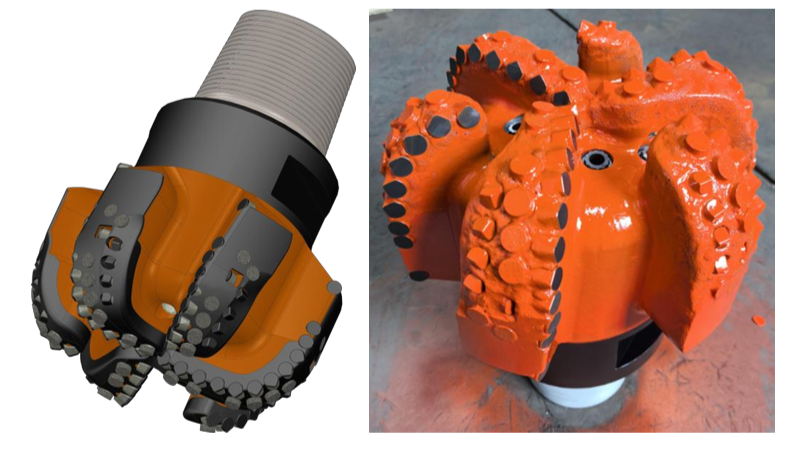
"Drill Bit Considerations for Hard Rock Drilling in Newberry, Oregon" by Rob Tipples et al. provides a comprehensive and highly practical insight into drilling performance in challenging geothermal environments. It focuses on the design and field validation of a 12.25” PDC drill bit tailored for hard, abrasive igneous formations, offering both theoretical background and real operational results.
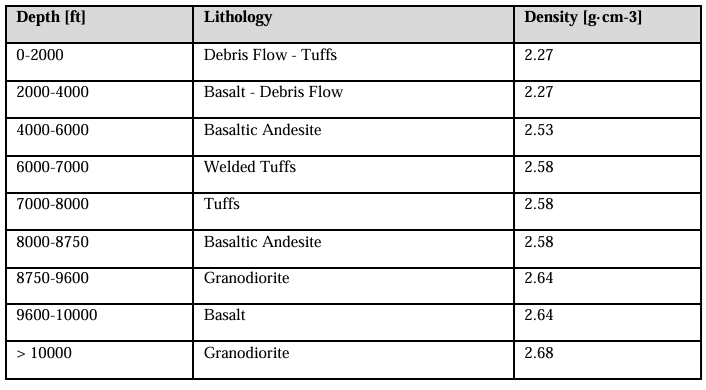
A key strength of the article is how clearly it frames the geological and operational challenges at the Newberry site. The description of interbedded volcanic lithologies—ranging from tuffs to basaltic andesite and granodiorite—combined with high temperatures (>300°C), sets a realistic context for why conventional drilling approaches struggle. The lithology table on page 1 is particularly useful, as it visually summarizes the complexity of formations with depth and their impact on drilling strategy.
The paper also does an excellent job of positioning PDC technology within the broader evolution of geothermal drilling. By referencing multiple global case studies, it convincingly demonstrates that PDC bits significantly outperform roller cone bits in igneous formations—both in rate of penetration and bit life. This contextualization helps the reader understand that the presented design is not an isolated innovation, but part of a broader industry shift.
One of the most valuable sections is the discussion on drilling dynamics. The authors clearly explain complex phenomena such as stick-slip, whirl, and high-frequency torsional oscillations, linking them directly to bit design and bottom hole assembly behavior. This section stands out for translating theory into actionable engineering considerations, especially in geothermal environments where friction and vibration are amplified.
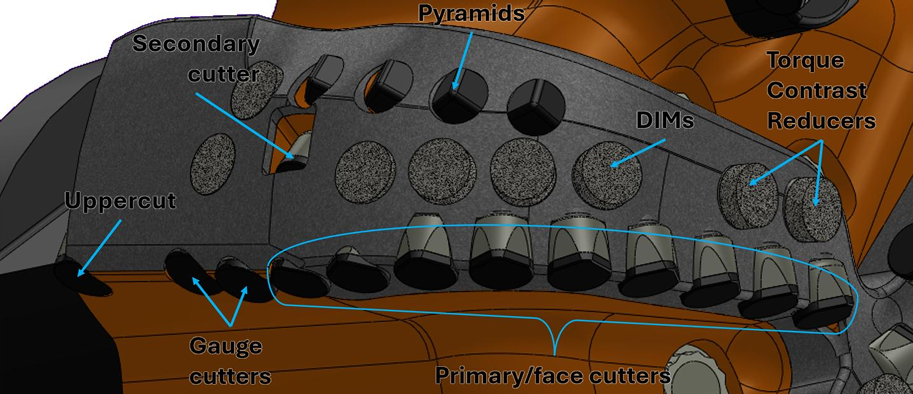
From a design perspective, the article provides a detailed and structured methodology. The distinction between primary cutting structures and supporting components is particularly insightful. The anatomy diagram on page 5 is one of the most informative visuals in the paper, clearly labeling elements such as cutters, gauge, pyramids, and diamond impregnated materials, helping readers better understand how each component contributes to performance and durability.
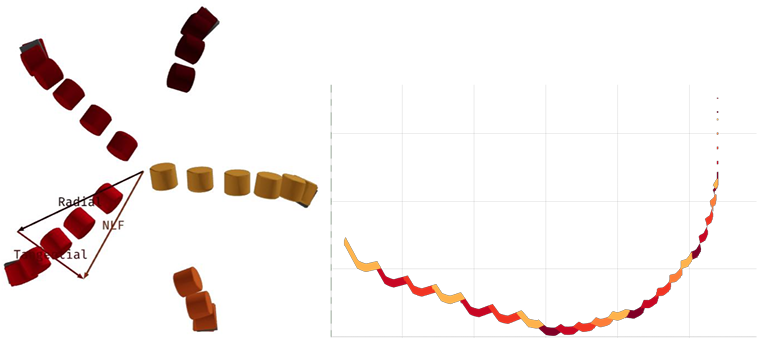
Equally compelling is the use of modelling in the design process. The force modelling visualization on page 6 effectively demonstrates how cutter forces are balanced to minimize lateral imbalance and improve efficiency. This figure adds strong technical credibility, showing that the design is not based on trial-and-error but on predictive engineering tools.
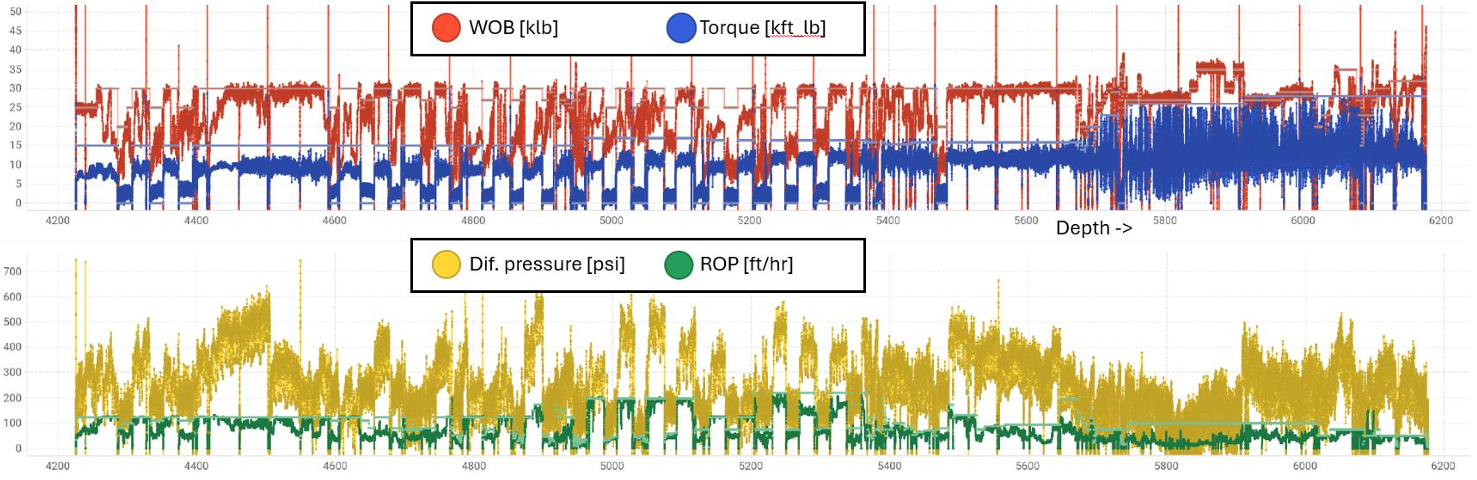
The field performance results are arguably the most impactful part of the paper. Achieving 1,952 ft drilled at an average ROP of 46 ft/hr—representing a 258% improvement over offset wells—is a remarkable outcome. The operational data plot on page 8 is particularly interesting, as it shows the evolution of WOB, torque, and ROP over depth, giving a dynamic view of drilling behavior rather than just summary metrics.
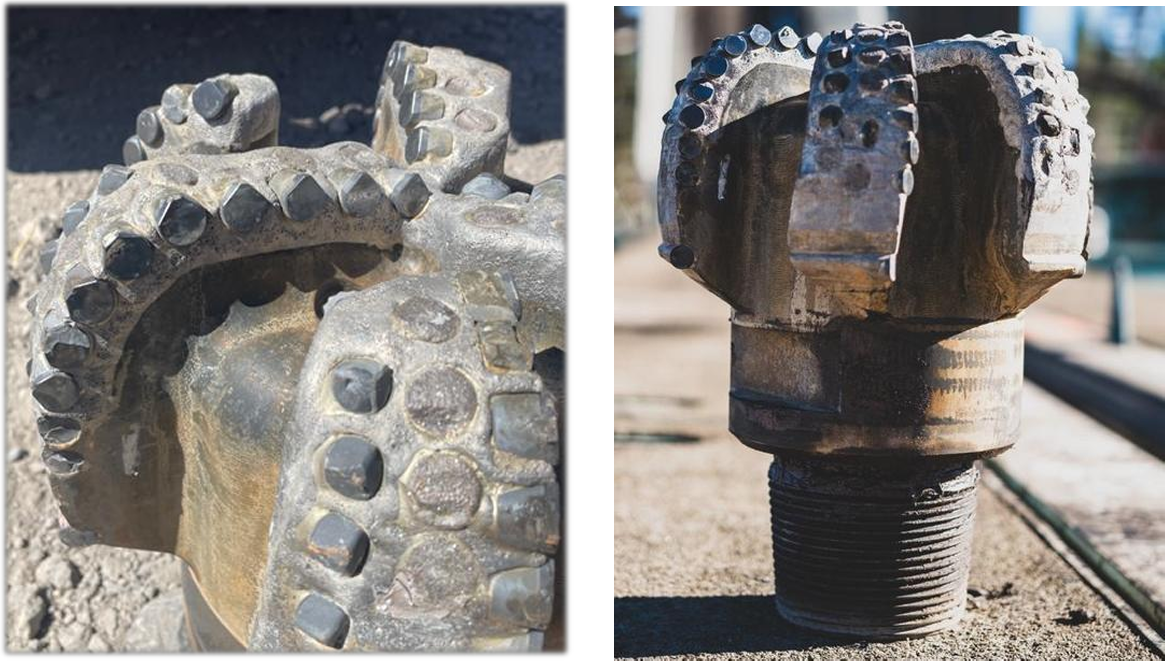
Finally, the post-run analysis and iterative improvement approach add significant value. The photos of the worn bit on page 9 provide a tangible understanding of failure modes, while the discussion of cutter wear, gauge damage, and redesign strategies demonstrates a strong feedback loop between field performance and engineering refinement.
Overall, the paper is a well-balanced combination of theory, design methodology, and real-world validation, making it highly relevant for geothermal drilling professionals.
PT Star Energy´s Hydrothermal well in West Java
"First Implementation of Innovative Hybrid Drill Bit Technology Set Benchmark Performance in Indonesia Geothermal Well" by Marina Sari presents a compelling case study on the application of hybrid drill bit technology in the Darajat geothermal field. It combines practical field results with engineering methodology, clearly demonstrating how innovation and collaboration can significantly improve drilling performance in complex volcanic environments.
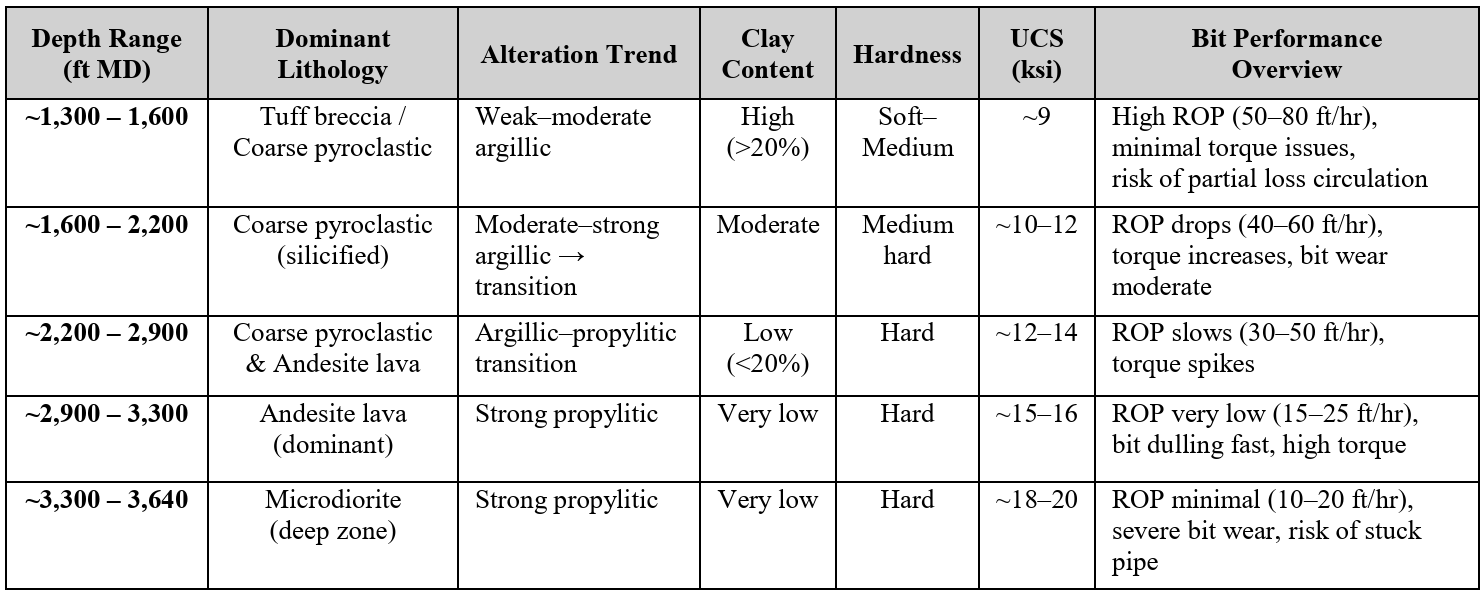
A strong aspect of the article is its detailed geological and operational context. The Darajat field is described as a vapor-dominated geothermal system with challenging lithologies, including andesite and microdiorite, which are both highly abrasive and mechanically strong. The table on page 2 is particularly insightful, showing how drilling performance deteriorates with depth as formations become harder, with ROP dropping to as low as 10–20 ft/hr in the deepest intervals. This provides a clear baseline for evaluating the improvements achieved later.
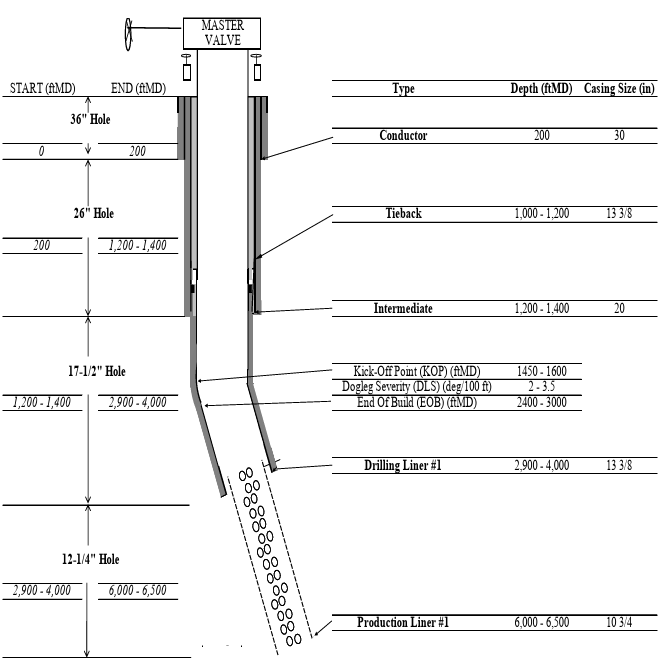
The paper effectively highlights the limitations of conventional drilling technologies. Historical data show that both TCI and PDC bits struggled with low ROP, short run lengths, and frequent trips, mainly due to vibration, torque spikes, and rapid wear in interbedded volcanic formations. The well schematic on page 3 is one of the most useful visuals, clearly illustrating the complexity of the well design, including long 17½-inch sections with significant directional requirements.
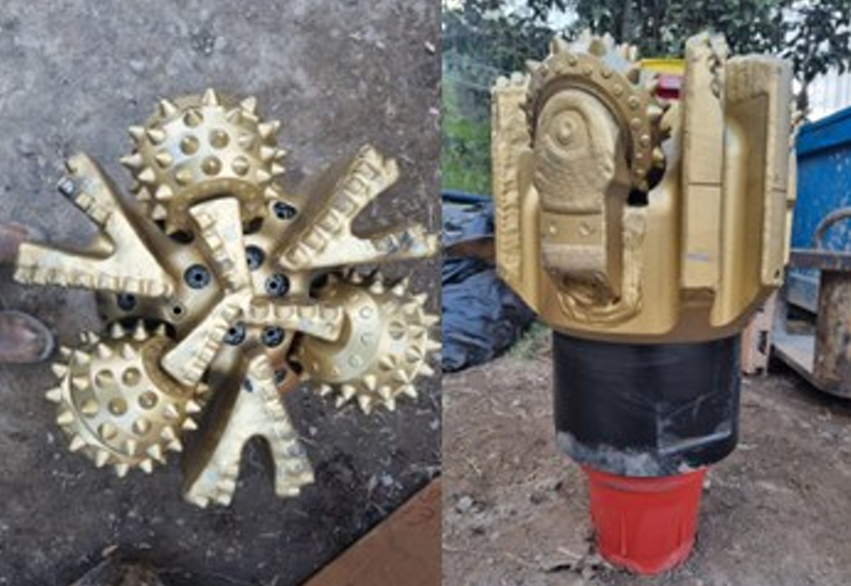
The introduction of hybrid drill bit technology is presented as a logical and well-justified solution. The authors clearly explain how the combination of roller cone crushing and PDC shearing creates a dual-action mechanism that is particularly effective in heterogeneous formations. The hybrid bit image on page 4 is one of the most interesting visuals, as it clearly shows the physical integration of both technologies, making the concept immediately understandable even for non-specialists.
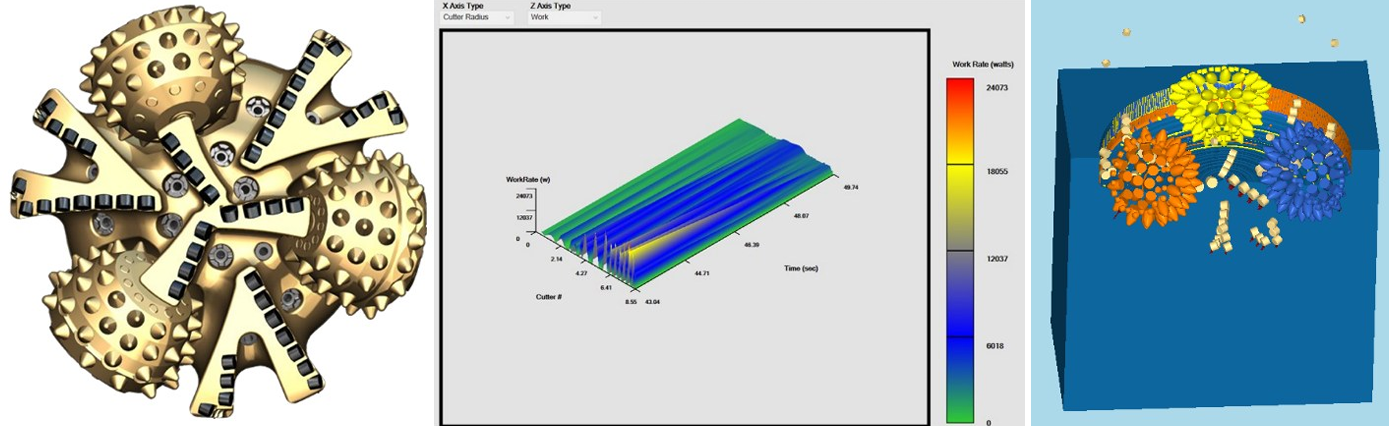
The methodology section adds substantial value by showing a structured and data-driven approach. The use of 3D drilling simulation (page 6) and the development of a drilling roadmap (page 7) illustrate how digital tools and modeling were used to optimize performance. The color-coded roadmap is particularly effective, clearly defining safe, optimal, and limit operating zones, making it highly practical for field application.
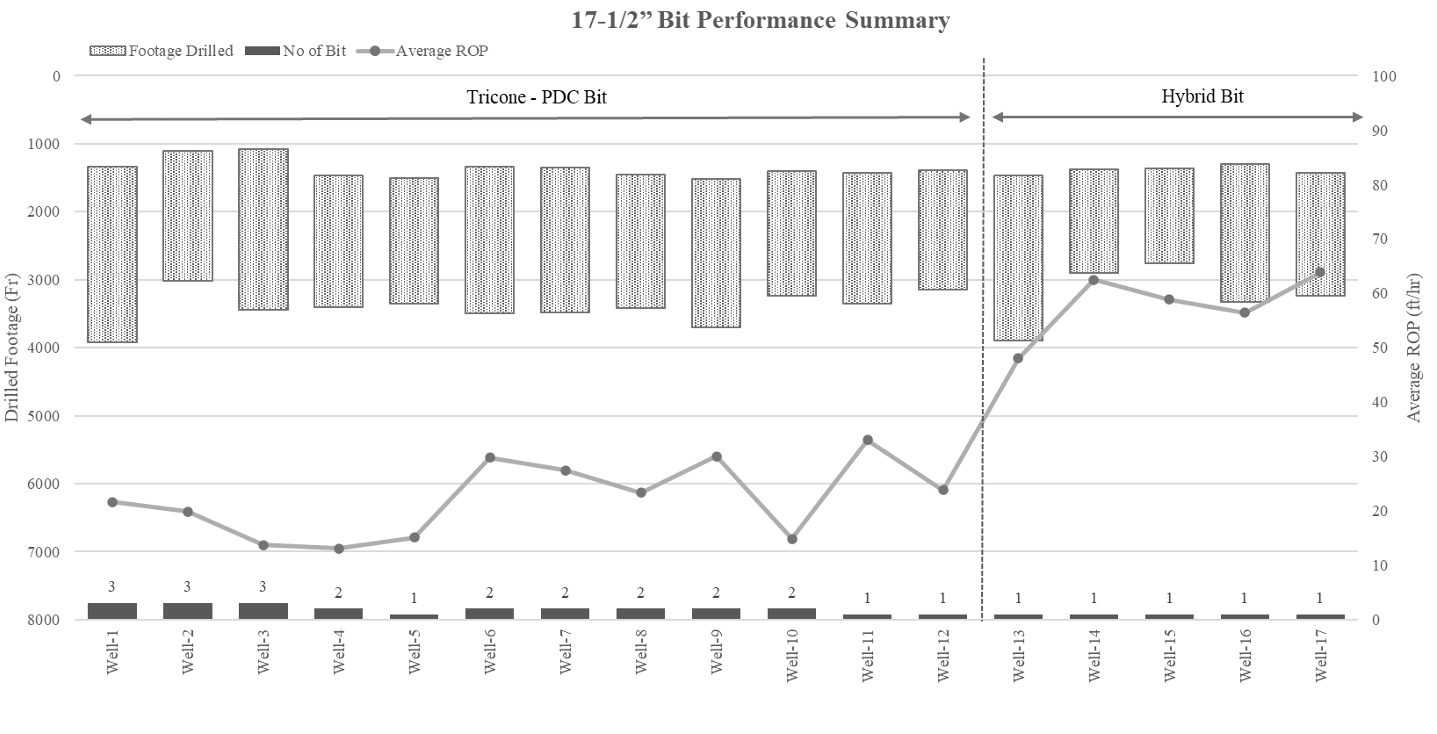
Field results are the most impactful part of the study. The hybrid bit achieved an increase in average ROP from approximately 22 ft/hr to 60 ft/hr and extended the average interval per run from 1,160 ft to 1,830 ft. Moreover, the ability to drill the entire section in a single run significantly reduced the number of trips and non-productive time. The comparative performance chart on page 8 is especially powerful, as it visually captures improvements in ROP, interval, and trip count across multiple wells.
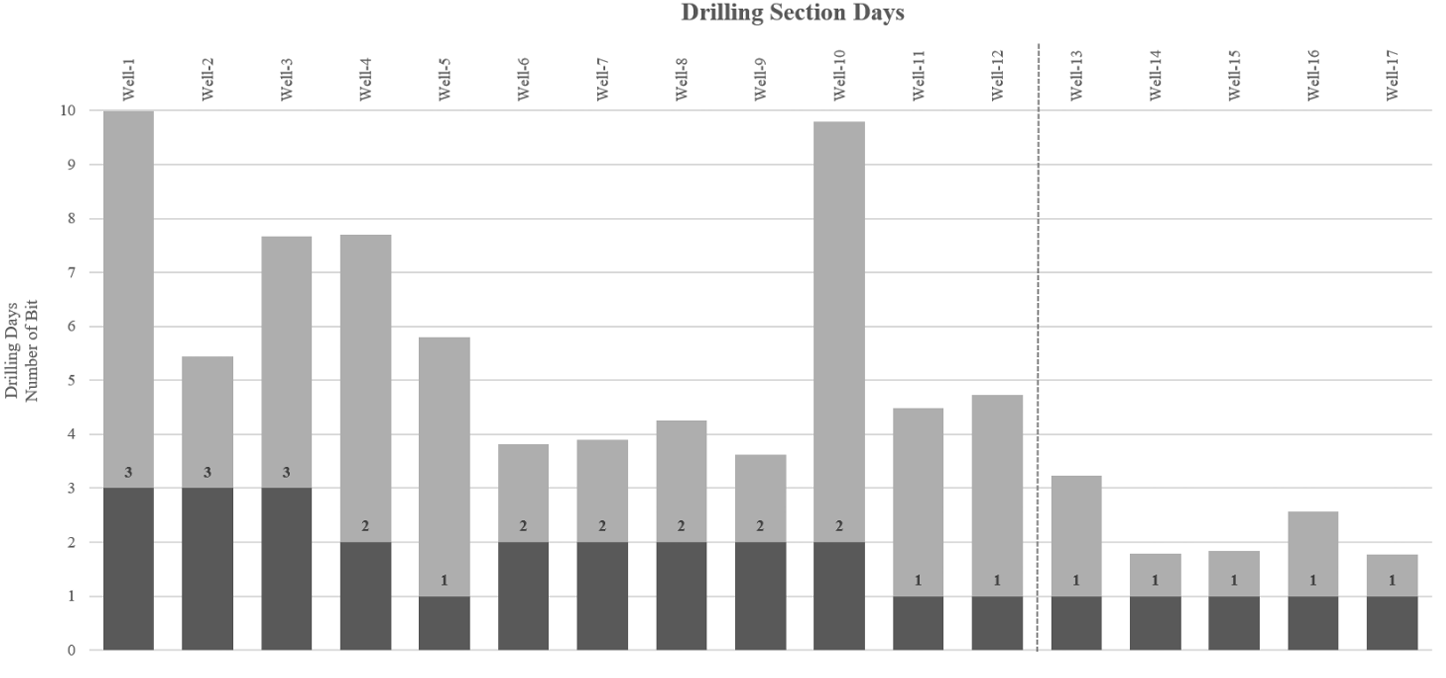
Finally, the discussion and conclusions emphasize the broader implications of the work. Beyond performance gains, the study highlights cost reductions, improved reliability, and better directional control. The drilling days comparison chart on page 10 effectively illustrates the operational impact, showing a clear reduction in drilling time per well.
Overall, the paper provides a well-rounded and practical contribution, demonstrating that hybrid drill bit technology can set new performance benchmarks in challenging geothermal environments.
So… What’s the Future?
These results don’t suggest a single winner. Instead, they highlight something more interesting - The “best” solution depends on:
- Lithology variability
- Directional requirements
- Vibration risk
- Operational constraints
In relatively predictable hard rock → advanced PDC may dominate. In highly interbedded, unstable formations → hybrid may outperform.
Final Thoughts
Both papers show that the future of geothermal drilling is not just about better tools—but about better integration of design, modelling, and field execution. And perhaps the most important takeaway: Performance gains are no longer incremental—they are becoming exponential when engineering, data, and field practice align.
Questions for Discussion
- Are hybrid bits a transitional technology, or a long-term standard for complex wells?
- How much of the performance improvement comes from the bit itself vs. drilling parameter optimization?
- Could we see adaptive or “smart” bits as the next step?
- And finally—what lessons from geothermal drilling can be transferred to oil & gas wells?
Curious to hear your perspective.
Copyright Notice:
This summary is based on the papers "Drill Bit Considerations for Hard Rock Drilling in Newberry, Oregon" by Rob Tipples , Mohamed-Idris Ben-Fayed, Patrick Brand, Romar Gonzalez Luis and Sahet Keshiyev and "First Implementation of Innovative Hybrid Drill Bit Technology Set Benchmark Performance in Indonesia Geothermal Well" by Marina Sari , Doddy Darmawan, Indira Yudha Wisnubaskara, Muhammad Azhar Aditama and Roger Lee. All figures are reproduced from the reports under fair use for review purposes.


