
GeoNerd Digest – 35th Edition: Breaking the 300°C Barrier: What the Newberry EGS Pilot Really Proves
In the 34th edition of GeoNerd Digest we touched drilling performance improvement in Indonesia and Mazama´s Oregon project. Now it´s time to dig deeper into Newberry projectBreaking the 300°C Barrier: What the Newberry EGS Pilot Really Proves East–west cross. Three papers collectively document a major technological milestone at the Newberry geothermal site: the successful design, drilling, stimulation, and initial operation of a >300 °C enhanced geothermal system (EGS). Together, they provide a coherent narrative—from subsurface understanding and drilling execution to reservoir creation and validation—demonstrating that superhot rock geothermal systems are transitioning from concept to field reality.

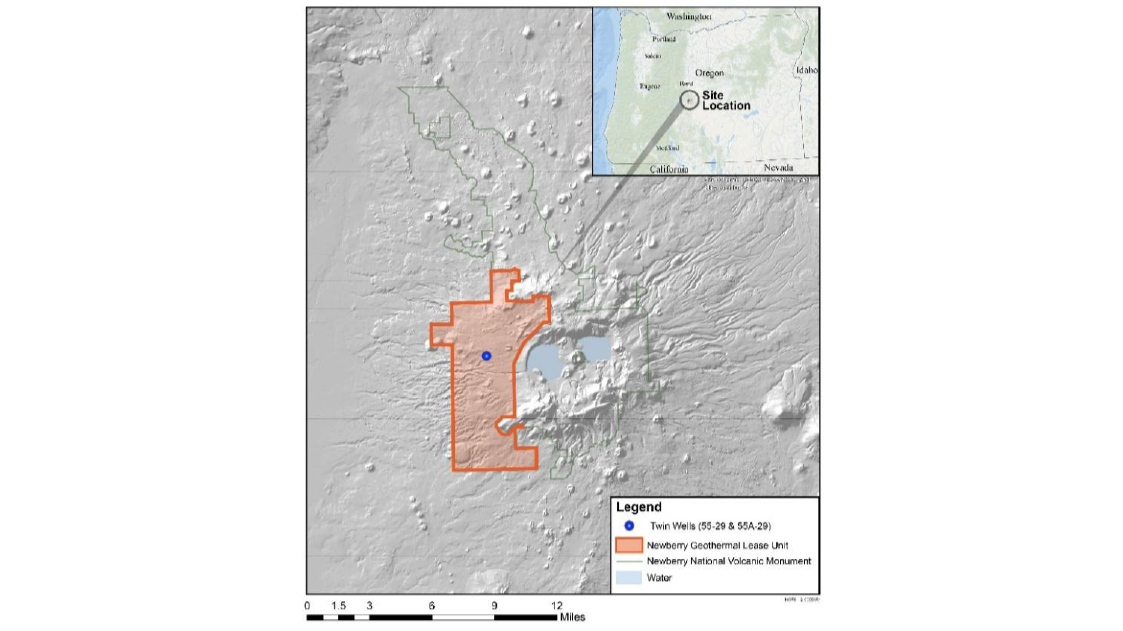

The first paper titled "A Major Milestone at Newberry, Oregon: Advancing Toward a Superhot Rock EGS Reservoir" by Alain Bonneville et al. establishes the broader context, presenting Newberry as one of the most promising superhot geothermal targets in North America. The site combines high geothermal gradients (>300 °C at ~3 km depth) with low permeability (~10⁻¹⁶ m²), making it an ideal candidate for engineered reservoirs. The motivation is clear: accessing temperatures approaching 400 °C dramatically increases energy density and power efficiency, potentially transforming geothermal economics.
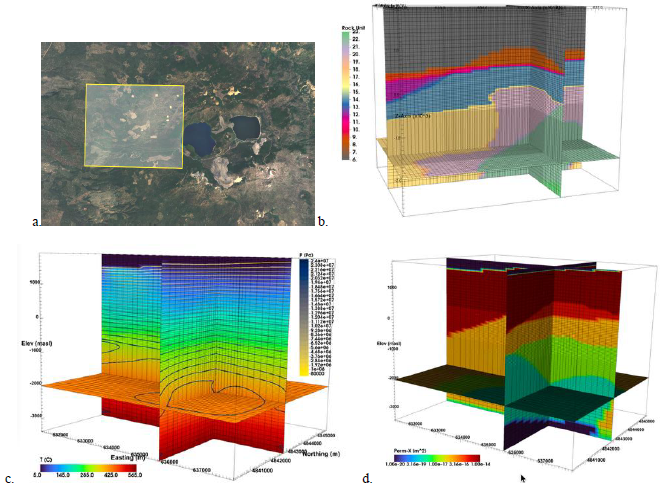
A key strength of this work lies in its integrated subsurface modeling. Figures 2 and 3 (page 3) show a detailed 3D geological and mesh model of the volcanic system, incorporating intrusive bodies constrained by gravity and seismic data. These visuals highlight the importance of granitic intrusions as brittle, fracture-prone zones that are favorable for stimulation.


The updated Thermal–Hydraulic–Mechanical–Chemical (THMC) model (Figure 5, page 4) extends into the supercritical region, capturing temperatures up to 565 °C—critical for future superhot development.
Newberry sits at the intersection of major tectonic regimes, producing a complex stress field that controls fracture propagation. The bimodal volcanic composition (basaltic andesite and rhyodacite) combined with intrusive bodies creates both challenges (hard, abrasive rock) and opportunities (fracture stimulation potential).
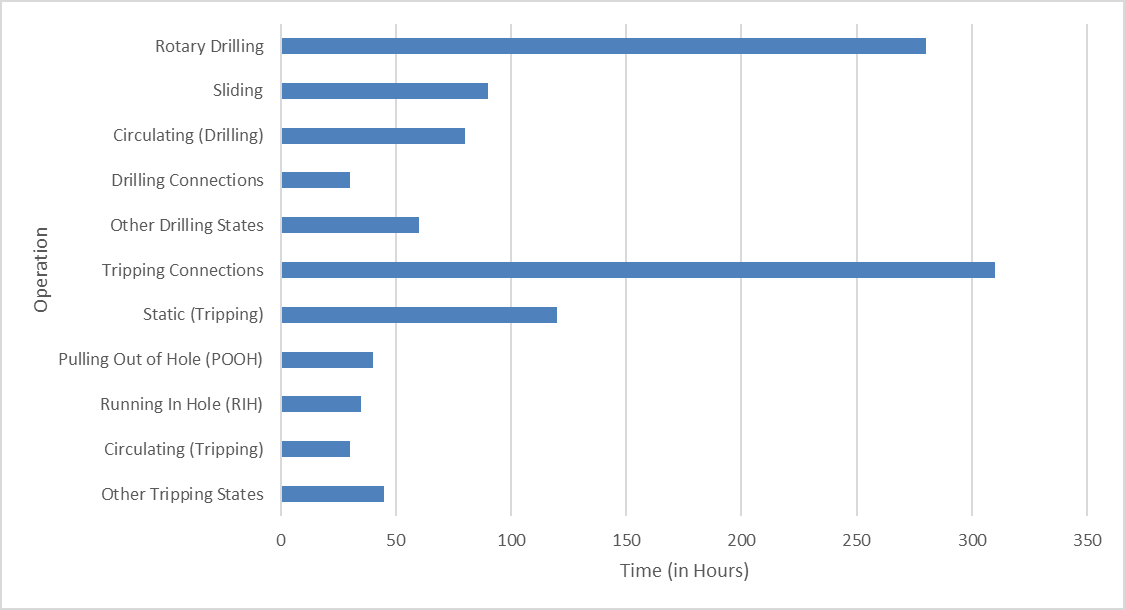
The second paper titled "Twinned at 300°C+: High-Performance Geothermal Drilling — Newberry Case Study" by Romar A. Gonzalez Luis et al. focuses on drilling performance, demonstrating that wells can be reliably drilled in >300 °C environments using optimized conventional systems. The results are striking: a 45% reduction in drilling time and 150–300% increase in ROP compared to offset wells, with over 120 hours of exposure above 300 °C and zero downhole tool failures. This challenges the long-standing assumption that drilling is the primary bottleneck for superhot geothermal. Figure 1 in this paper (page 5) provides a breakdown of drilling and tripping time, showing that rotary drilling dominates operations, while tripping remains a major time component.
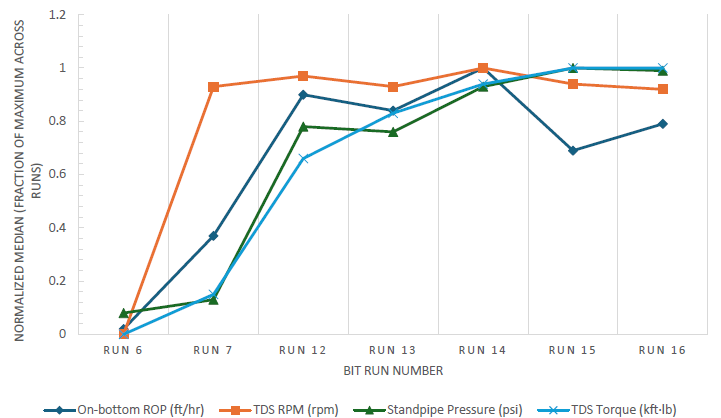
More importantly, Figures 2–4 (pages 7–8) illustrate normalized drilling performance improvements, clearly showing how real-time optimization and system-level integration drive efficiency gains rather than purely material innovations.
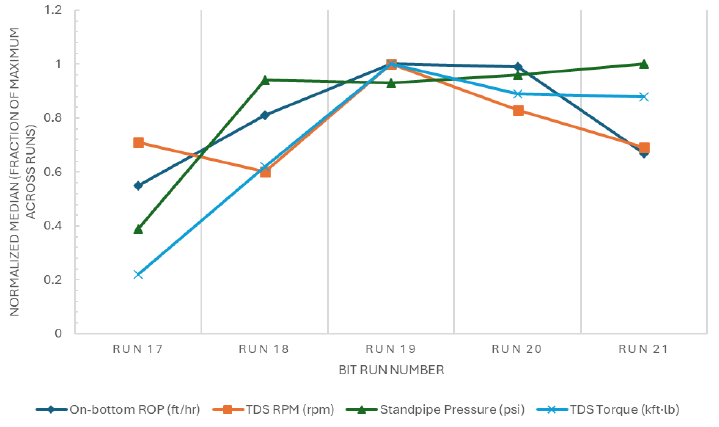
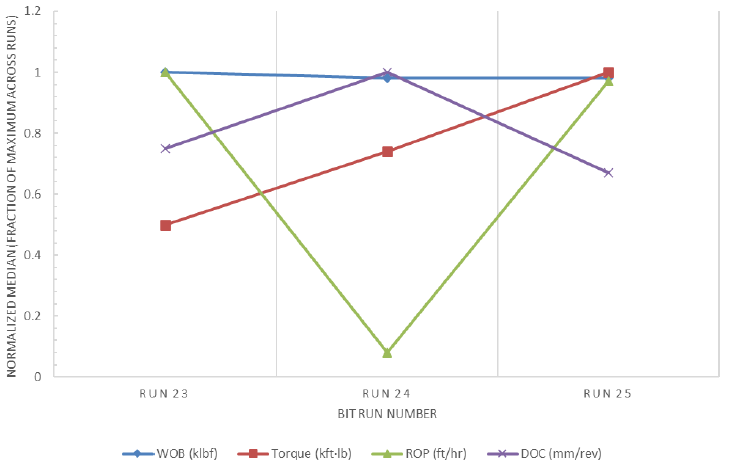
A critical takeaway from the drilling study is the emphasis on system integration: BHA design, thermal management, and operational discipline outperform reliance on exotic technologies. The successful use of PDC bits in hard volcanic rock—traditionally a limiting factor—demonstrates that bit technology has matured sufficiently for geothermal applications.
The third paper titled "Implementation of the World’s First Greater than 300 °C Propped EGS Reservoir" by Gabrijel Grubac et al. shifts focus to reservoir stimulation and connectivity, presenting the first implementation of a propped EGS system above 300 °C. The use of hybrid fluid systems, staged stimulation, and real-time diagnostics (DTS/DAS, tracers, microseismic) represents a significant advancement over previous EGS approaches.
Figures 2 and 3 (page 3) in this paper show modeled fracture geometries and connectivity scenarios between injector and producer wells. These images are particularly important because they demonstrate that designed fracture lengths (>80 m) and spacing (~90 m) are sufficient to ensure connectivity—validated later by field data.


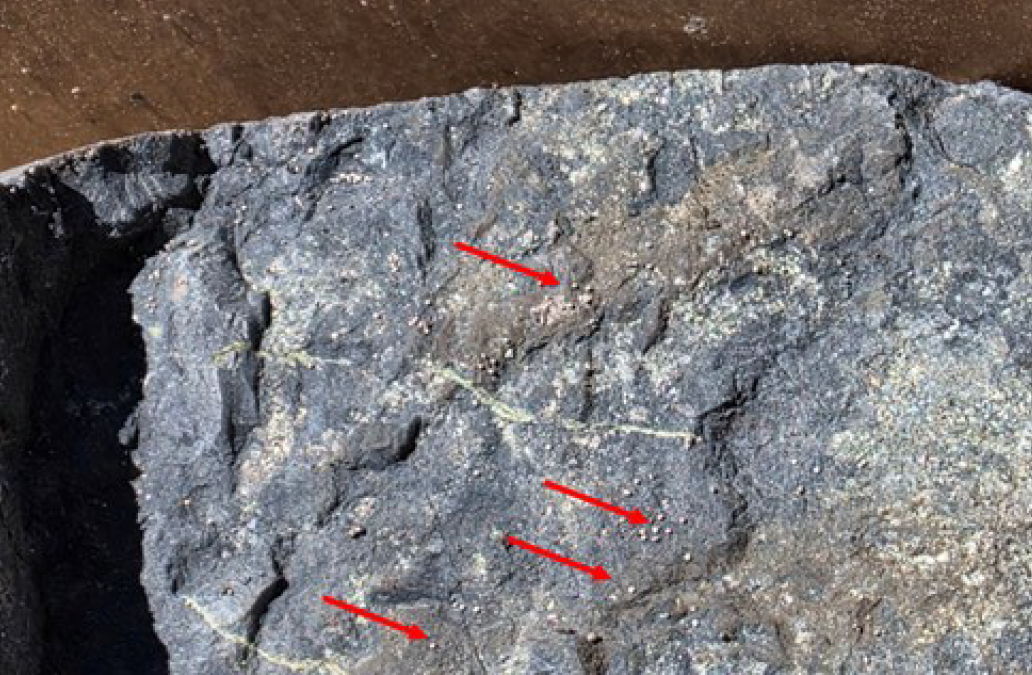
One of the most compelling pieces of evidence comes from the core sample (Figure 7, page 8), where proppant particles were physically observed in the producer well. This provides direct proof of fracture connectivity over ~93 m, bridging the gap between modeling and real-world validation.
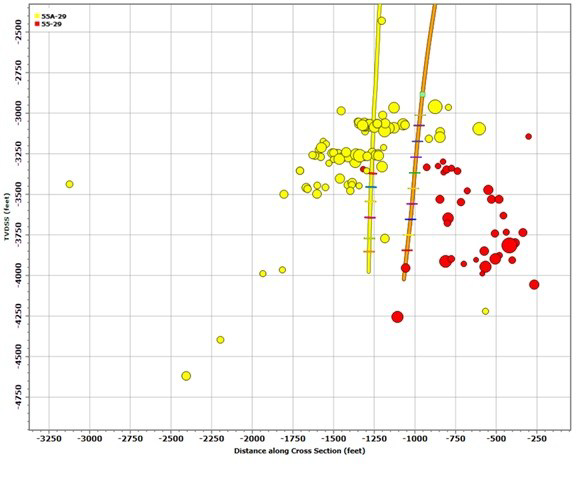
The diagnostic approach is another highlight. Figures 9 and 10 (page 9) show microseismic event clouds aligned with the regional stress field, indicating both vertical and lateral fracture propagation. Interestingly, seismicity remained very low, suggesting that effective stimulation can be achieved without significant induced seismic risk.

Further confirmation of connectivity comes from tracer studies, which show clear breakthrough between wells. The tracer analysis indicates fast communication (first arrival ~9.5 hours) and measurable reservoir volume (~195 bbl), providing quantitative insight into flow pathways and reservoir behavior. Returning to Bonneville et al., Figure 9 (page 8) presents thermal power output during flow testing, reaching up to 4.5 MWt (~0.7 MWe equivalent). While still at pilot scale, this demonstrates stable circulation and meaningful heat extraction from the engineered reservoir.

Figure 10 (page 9) further contextualizes this result by comparing power density per unit water across EGS projects. Newberry stands out due to its high power density, confirming the strategic advantage of superhot systems in water-constrained environments.

Across all three papers, a consistent theme emerges: connectivity is the central challenge—and it has been successfully demonstrated. This is supported by multiple independent datasets: pressure interference, tracers, fiber optics, microseismic monitoring, and core evidence.
The overarching conclusion is that the Newberry project represents a fully integrated proof-of-concept for superhot EGS. Drilling, stimulation, and reservoir operation—historically treated as separate challenges—are shown to be solvable within a unified engineering framework.
Looking forward, the studies emphasize scaling: deeper wells (>400 °C), longer laterals, and higher stage counts. The combination of improved drilling efficiency, validated stimulation methods, and robust monitoring systems suggests that commercial deployment is now a realistic next step.
Questions for discussion:
- Why is induced seismicity so low in this case—and is that universally achievable?
- If Newberry operates at higher temperatures, why is the thermal (and potential electric) output still lower than Fervo’s lower-temperature systems?
- Is it primarily a question of flow rate vs. temperature (enthalpy vs. mass flow trade-off)?
- Are we seeing limitations in fracture surface area or connectivity efficiency?
- Does well architecture (vertical vs. long laterals) dominate performance more than temperature?
- Are we comparing a pilot system vs. an optimized field development, and is that the real explanation?
Curious to hear your perspective.
Copyright Notice:
This summary is based on the papers "A Major Milestone at Newberry, Oregon: Advancing Toward a Superhot Rock EGS Reservoir" by Alain Bonneville, Sriram Vasantharajan, Patrick R. Brand, Jonathan Alcantar, Mohammed-Idris Ben-Fayed, Gabrijel Grubac, Wadood El-Rabaa, Romar A. Gonzalez Luis, Robert Swanson, Adam Kent, Eric Sonnenthal, Nori Nakata, Ahmad Ghassemi, Geoffrey Mibei, Ph.D.and Parker Sprinkle, "Twinned at 300°C+: High-Performance Geothermal Drilling — Newberry Case Study" by Romar A. Gonzalez Luis, Mohammed-Idris Ben-Fayed, Patrick R. Brand and Jonathan Alcantar and "Implementation of the World’s First Greater than 300 °C Propped EGS Reservoir" by Gabrijel Grubac, Wadood El-Rabaa, Alain Bonneville, Mohammed-Idris Ben-Fayed, Romar A. Gonzalez Luis, Geoffrey Gullickson and Oswaldo Perez. All figures are reproduced from the reports under fair use for review purposes.


