
GeoNerd Digest – 37th Edition: The Open-Source Playbook Geothermal Needs to Scale
This 37th GeoNerd closes our SGW2026 series with a paper that feels especially relevant for the next stage of geothermal. Its author, Greg Leveille, is a former ConocoPhillips’ Chief Technology Officer. Greg has recently become a member of GA Drilling’s Board, bringing decades of oil & gas technology leadership into the geothermal conversation. It was great to meet Greg on one of our recent board meetings. His message is direct: if geothermal wants to scale fast, it cannot afford to learn slowly.


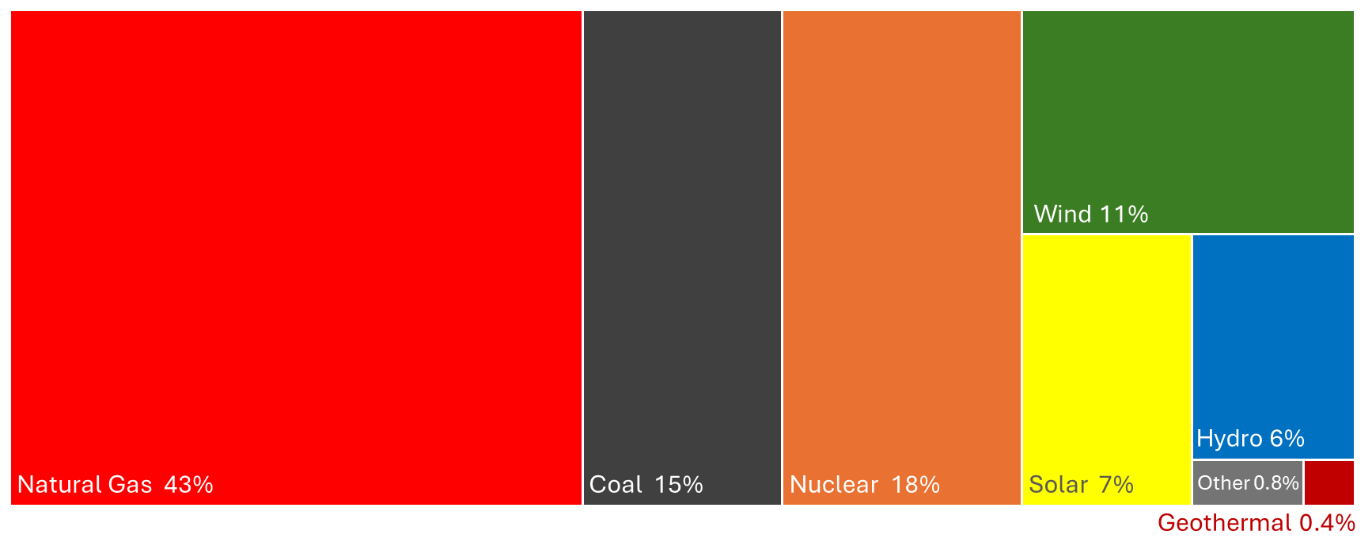
The paper titled "Why an Open-Source Approach to Technical Knowledge Sharing is Crucial for Rapidly Expanding Geothermal’s Share of the Power Production Market" starts with a paradox. The geothermal resource is enormous, theoretically capable of supplying humanity’s energy needs for thousands of years, yet geothermal remains a tiny part of today’s power mix. In the U.S., the paper shows geothermal at only around 0.4% of power generation. The recent momentum is real — better subsurface tools, technology transfer from oil & gas, and premium demand for clean firm power — but the industry still needs major performance improvements to become a meaningful share of the market.
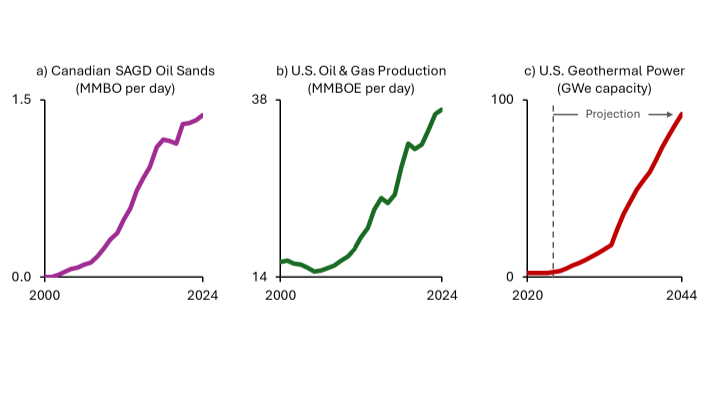
The paper includes a couple of lessons from O&G industry which can be helpful for geothermal sector. The first major lesson comes from Canadian oil sands production from wells using Steam Assisted Gravity Drainage (SAGD) technology - see left side of the cover image. SAGD did not scale because one company solved everything alone. It scaled because government support, shared field testing, joint industry participation, and technical knowledge exchange helped turn a technically difficult resource into a major production base. The Alberta Underground Test Facility is presented as a model: government helped de-risk the concept, industry joined in, and hundreds of technical reports and publications accelerated learning across the sector.
The second lesson comes from U.S. unconventional oil and gas. Leveille describes three phases: early government-supported experimentation, a high-price “brute force” growth phase dominated by rigs and secrecy, and then a post-2014 phase triggered by the oil price collapse. That crisis forced operators to innovate faster, lower costs, improve well performance, and share more development-related knowledge. The result was not just survival — the unconventional sector became stronger, leaner, and more profitable.

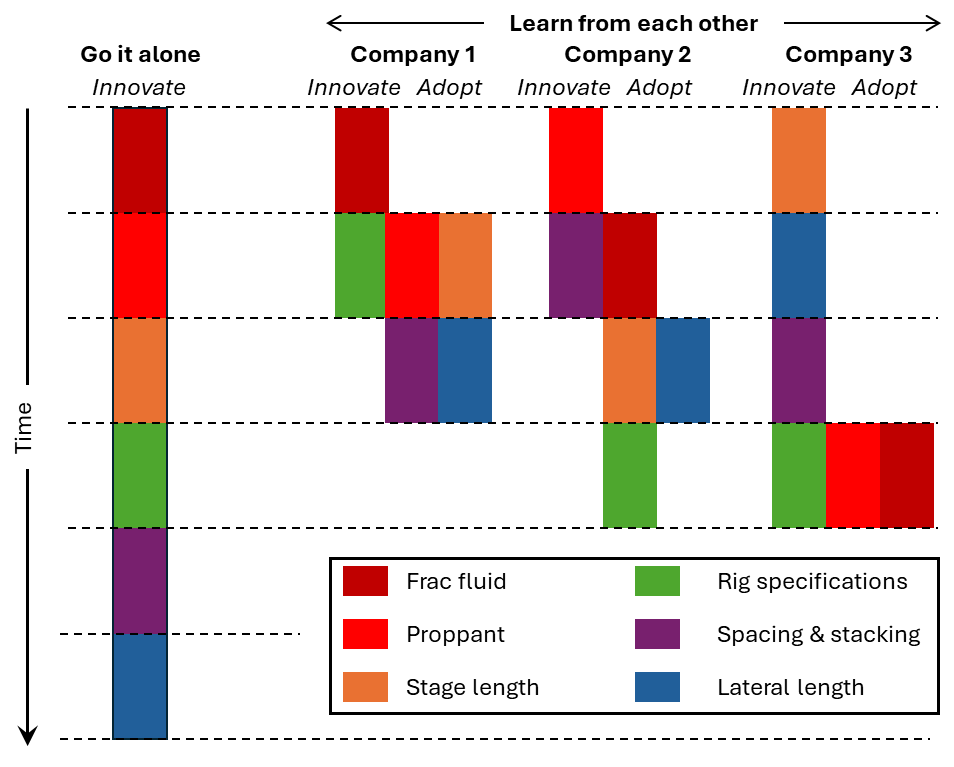
The core insight is that open-source-style knowledge sharing is not charity. It is an economic strategy. No single company had enough ideas, data, failures, or field experiments to optimize unconventional reservoirs on its own. By learning from each other’s mistakes, pilots, completions, diagnostics, and operational practices, companies reduced repeated failure and shortened the time needed to find better answers - see figure below. The paper argues geothermal should not wait for its own “near-death experience” before adopting the same mindset.
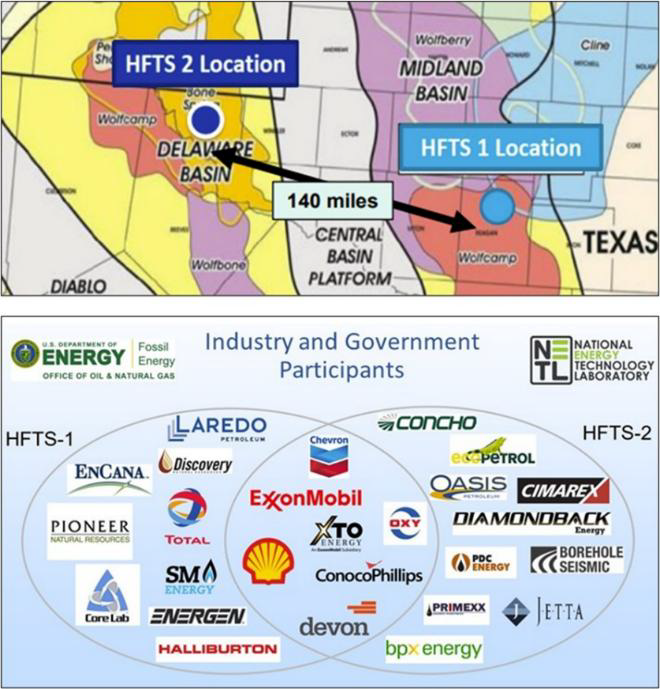
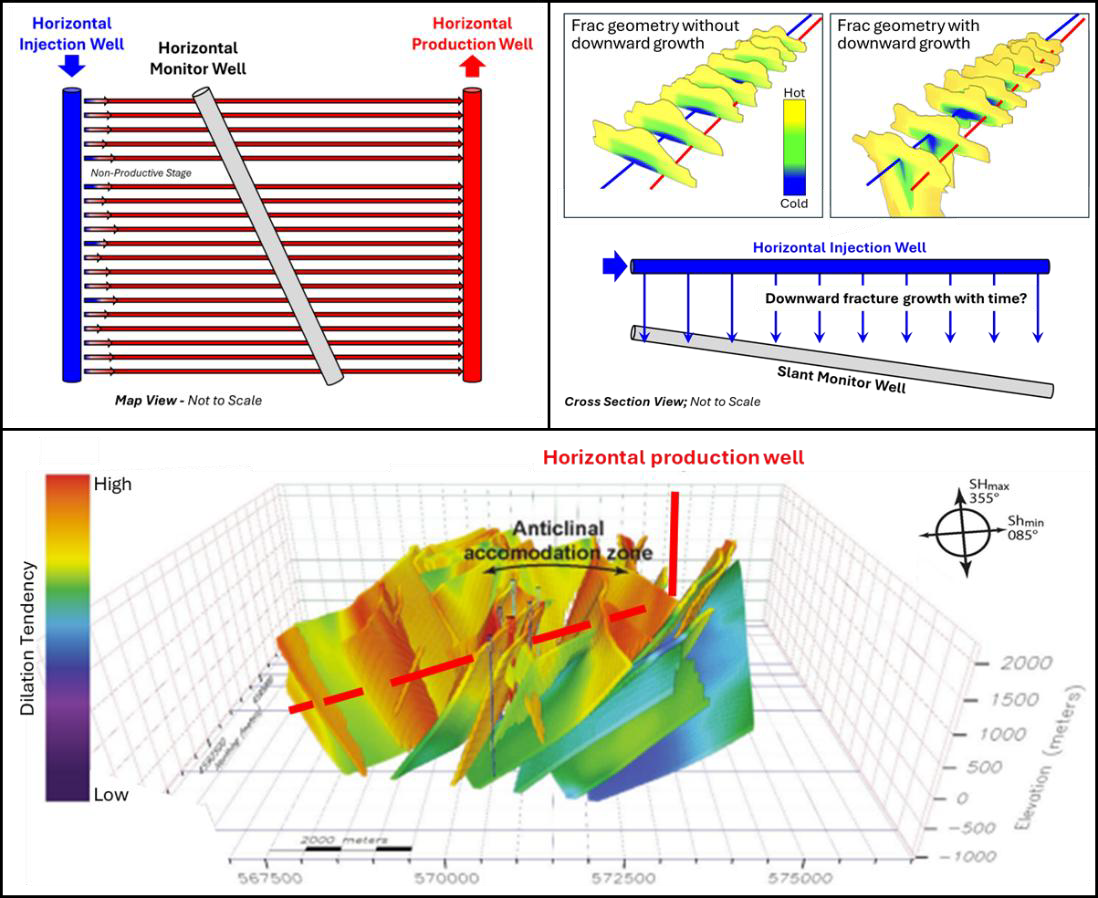
One of the strongest examples is the Hydraulic Fracturing Test Sites (HFTS) in the Permian Basin. These projects brought together operators, service companies, government, national labs, and universities. Costs were shared, technical experts shaped the scope, data was initially shared with participants, and then released publicly after a quarantine period. Just as important, these projects built trust between subject matter experts — and those relationships became a powerful channel for future collaboration.
For geothermal, the warning is clear. The industry is excited, and rightly so, but early enthusiasm can hide difficult realities. Premium pricing for clean firm power may not last forever. Unexpected technical challenges will appear in hydrothermal, EGS, superhot rock, sedimentary geothermal, and pressure geothermal projects. Issues like injection strategy, thermal breakthrough, induced seismicity, casing deformation, fluid losses, high-temperature materials, and reservoir characterization are too important for every company to solve in isolation.
Leveille’s recommendation is a practical playbook for geothermal liftoff (figure below): share more development and operational knowledge, build more multi-company field test sites, create technical working groups, encourage expert networking, transfer suitable technologies into the service sector, and help build a stronger geothermal supply chain. The paper also challenges developers to think less like narrow technology specialists and more like technology integrators.
The conclusion is simple: geothermal’s real competitors are not only other geothermal developers — they are the incumbent power sources the industry hopes to displace.
Questions for Discussion
- What geothermal knowledge should remain proprietary, and what should become shared industry infrastructure?
- What are the best geothermal equivalents of the SAGD Underground Test Facility or the Permian Hydraulic Fracturing Test Sites?
- How can geothermal companies share failures without damaging investor confidence?
- Is geothermal currently too fragmented into technology “camps” — hydrothermal, EGS, superhot rock, closed-loop, sedimentary?
- What would be the highest-value shared field experiment for the geothermal industry right now?
- How can startups and service companies benefit from more open operator knowledge without losing their own IP advantage?
- Are we building a geothermal industry that can survive lower power prices, or are we relying too much on today’s premium for clean firm energy?
Leave your opinion in the comments!
Copyright Notice:
This summary is based on the paper "Why an Open-Source Approach to Technical Knowledge Sharing is Crucial for Rapidly Expanding Geothermal’s Share of the Power Production Market" by Greg Leveille presented at the SGW 2026, Stanford, CA. All figures from the paper are used under fair use for review purposes only.


