
URTeC 2026: Enhancing recovery from American unconventional reservoirs while concurrently ramping up exploration overseas
Two themes dominated URTeC 2026 in Houston: getting more out of America’s unconventional reservoirs, and the race to take acreage in international shale plays. Greg Leveille, GA Drilling board member and former ConocoPhillips CTO, reports on what Chevron, OXY and Continental shared about enhanced oil recovery, and sets out why he expects plays larger than the Permian Basin and the Marcellus to be found overseas. Reposted with permission from Tidal Wave Technologies.


There were two themes that dominated the 2026 Unconventional Resources Technology Conference (URTeC), which was held in Houston during the week of June 22nd.
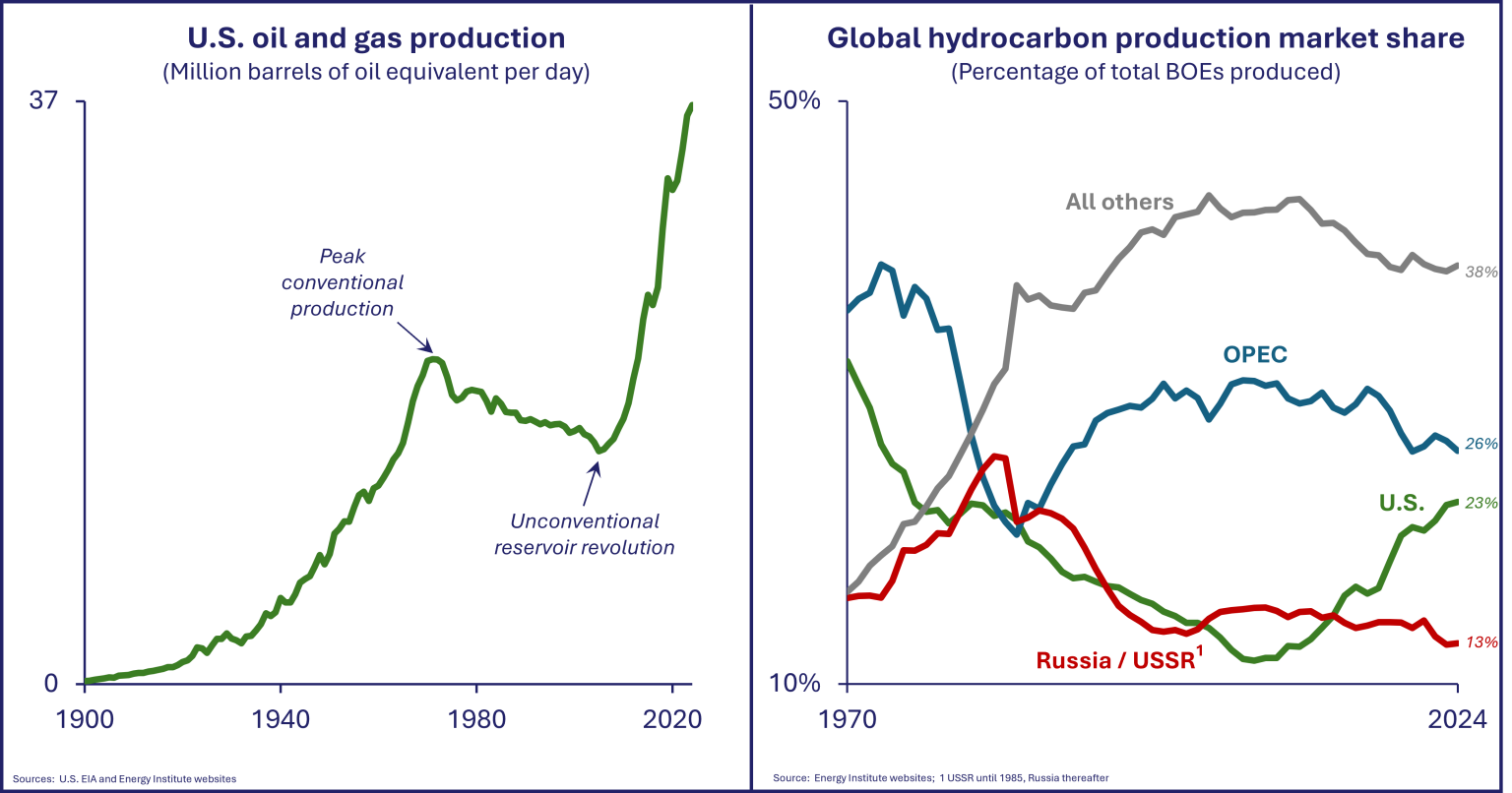
The first was the growing need to increase recovery from America’s unconventional reservoirs using approaches like enhanced oil recovery (EOR) and refracs, with the goal of such efforts being to increase profitability and maintain high levels of production (see figure below).
Figure 1. Graphs showing how production from unconventional reservoirs has transformed America’s oil & gas industry, propelling it to levels of output far beyond what any country has ever achieved and allowing it to grow market share to the point where the U.S. is today producing almost as much oil & gas as all the OPEC nations combined. It will however be challenging to maintain production at or above current levels as the inventory of undrilled Tier One unconventional acreage gets ever smaller, which is why methods for increasing recovery factors are receiving considerable attention.
Of the various methods available to increase recovery from unconventional reservoirs, EOR garnered by far the greatest amount of interest at URTeC, with nearly every available seat being taken during talks given by leading EOR practitioners.
During the conference unconventional EOR success stories were shared by Chevron, Chord Energy, Continental Resources, and OXY. In addition, university researchers presented results from numerous EOR related lab experiments, and technical representatives from several operators other than those noted above let me know that they too have achieved commercially viable outcomes from their EOR pilots.
The most impressive unconventional EOR presentation that I sat in on was one given by Johannes Alvarez, Chevron’s Enhanced Oil Recovery Manager, Shale and Tight Reservoirs.
In his presentation, Johannes described a simple but seemingly extremely effective EOR approach – an approach that utilizes both chemical treatments and gas huff-n-puff to maximize recovery and rates of return (see figure below).
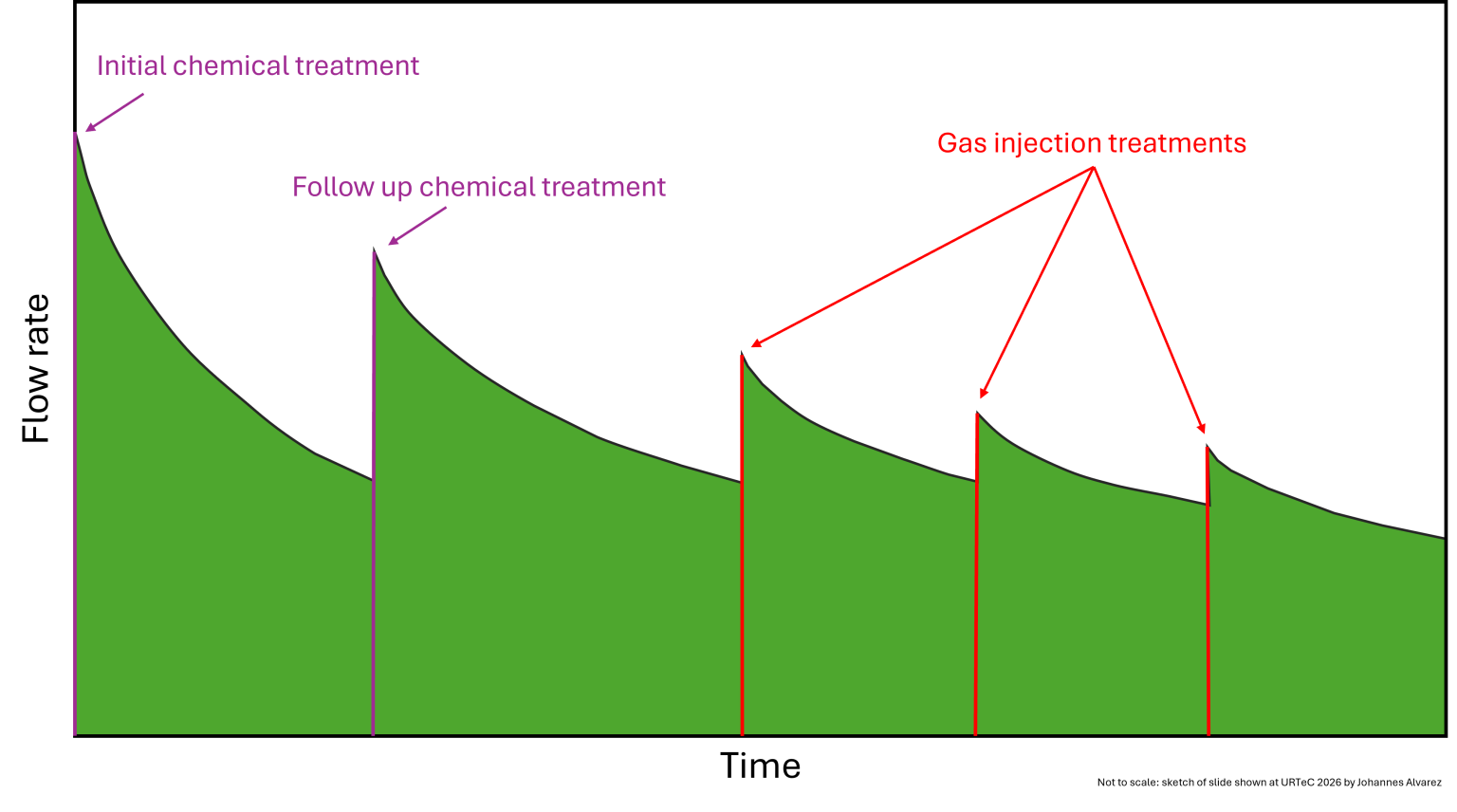
Figure 2. Chevron’s approach to EOR in the Permian Basin.
Other useful observations shared by presenters who spoke about EOR during the conference included:
- The choice of the chemicals utilized and the methods by which they are deployed can make the difference between a successful EOR project and one that fails to deliver a commercial outcome (note – the term “chemicals” was generally used during the conference in a very broad sense, with the usage presumably being chosen to avoid describing the specific solvents, surfactants, or other chemicals an operator was pumping downhole).
- Several operators commented on the fact that they were pumping “chemical cocktails”, with each component designed to attack a specific factor impeding higher recovery).
- Chevron commented that EOR can be and should be done from day one in most unconventional oil reservoirs.
- Chevron further indicated that they believe EOR has the potential to double recovery from Permian Basin wells and that they have already deployed EOR treatments in over 600 wells.
- OXY reported that they have done much work on CO2 EOR in unconventional reservoirs and foresee achieving significantly increased recoveries in the Permian Basin.
- Additionally, EOR insights are causing operators to consider altering their approach to primary development I order to improve recoveries achievable using EOR techniques.
The other big theme at URTeC this year was that an ever expanding number of companies are seeing international unconventional reservoirs as commercially attractive targets now that unconventional technologies have evolved sufficiently to overcome the many above ground challenges inherent in operating outside of the United States and Canada.
This was a topic that Doug Valleau and I spoke about at an invited lunchtime talk that conference attendees had to pay an extra $80 to attend.
By way of conveying the level of interest that international unconventional exploration and development garnered at URTeC this year, all the seats for our presentation were sold out even though the size of the room we were speaking in had been expanded to accommodate additional attendees.
During our talk we presented evidence that unconventional plays larger than the Permian Basin and the Marcellus Shale, the two largest U.S. unconventional plays, are awaiting discovery overseas.
We also suggested that as was the case with five of the six largest U.S. unconventional plays, many of the most significant international plays will be discovered in non-obvious locations – locations where there is little established conventional production nearby (see figure below).

Figure 3. Graphics describing how all but one of America’s largest unconventional plays were discovered in areas that were not obvious in the sense that there was little conventional production in the area, with the northeastern sweet spot in the Marcellus play and the Bakken play in North Dakota exemplifying this relationship.
Other indicators that interest in international unconventional reservoir exploration and development is ramping up quickly include:
- ADNOC (UAE’s national oil company) where a Diamond Sponsor for the conference, which was a higher level of sponsorship than that of any other company,
- ADNOC sent a large delegation to URTeC, including several senior leaders, and expressed interest in holding an international URTeC event in Abu Dhabi in 2027,
- The number of U.S. companies establishing acreage positions in international unconventional plays is increasing rapidly (EOG UAE, Continental Turkey, Continental Argentina, Formentera Venezuela),
- INPEX recently executed a farm-in deal for acreage in the Beetaloo Basin in Australia that will fund a significant shale gas appraisal drilling program (INPEX press release), and
- Service companies have begun deploying modern drilling rigs and frac fleets to overseas locations (H&P, Liberty Energy).
Now is therefore the time for oil and gas E&P companies to turn attention to acquiring large acreage positions in prospective international unconventional plays, for, as is shown in the figure below, the best acreage is usually acquired by early movers.

Figure 4. Graph showing the history of acreage acquisition, exploration discoveries, and production in the Rotliegendes play in the Southern North Sea. Over 90% of the resources discovered in this play are located on leases acquired before the first exploration well was drilled, demonstrating the truism that explorers that acquire acreage early on in relatively untested but prospective areas nearly always secure the greatest share of the resources.
Finally, here is a LINK that will allow you to access the slides Doug and I used in our URTeC lunchtime talk. The abstract we provided the URTeC organizers for use in advertising for our talk ahead of the conference has been pasted in below so that you can get a sense of the “voice over” that accompanied the slides.
URTeC Lunchtime Talk Abstract
Discovering and Commercializing Unconventional Reservoir Plays Larger and More Prolific than the Permian Basin and Marcellus Shale – The Promise of International Unconventionals
Greg Leveille, ConocoPhillips (retired); currently Tidal Wave Technologies
Douglas Valleau, Hess (retired); currently Strategia Innovation Advisors
Today, unconventional reservoirs in the Permian Basin produce more than five million barrels of oil per day, while the Marcellus Shale delivers over twenty-five billion cubic feet of natural gas. These production volumes are so large that it is difficult to imagine bigger plays ever being discovered. Yet, as this talk will demonstrate, the history of our industry suggests that much larger and more prolific unconventional plays will almost certainly be found and developed outside the United States.
Larger hydrocarbon accumulations. Sweeter sweet spots. Thicker pay sections. In theory, international unconventional opportunities should represent an explorer’s dream scenario. In practice however, unconventional exploration outside the United States has struggled to gain traction except in a few countries because of numerous mostly above-ground challenges.
This however is about to change since unconventional reservoir technologies have evolved to a point that deployment of the latest technological capabilities can economically overcome nearly all above ground challenges, especially when used to develop reservoirs as good or better than the best Tier One unconventional acreage in the United States.
Now is therefore the time for international unconventionals to fulfill their promise. The time when acreage in the most prolific sweet spots will be captured. The time when plays larger than the Permian Basin and Marcellus Shale will be discovered and commercialized. A time when explorers’ dreams will become reality.
Attend this talk to learn more about the promise of international unconventionals and join the discussion during the Q&A period if you have insights to share.


