Coiled tubing drilling with NexTitan

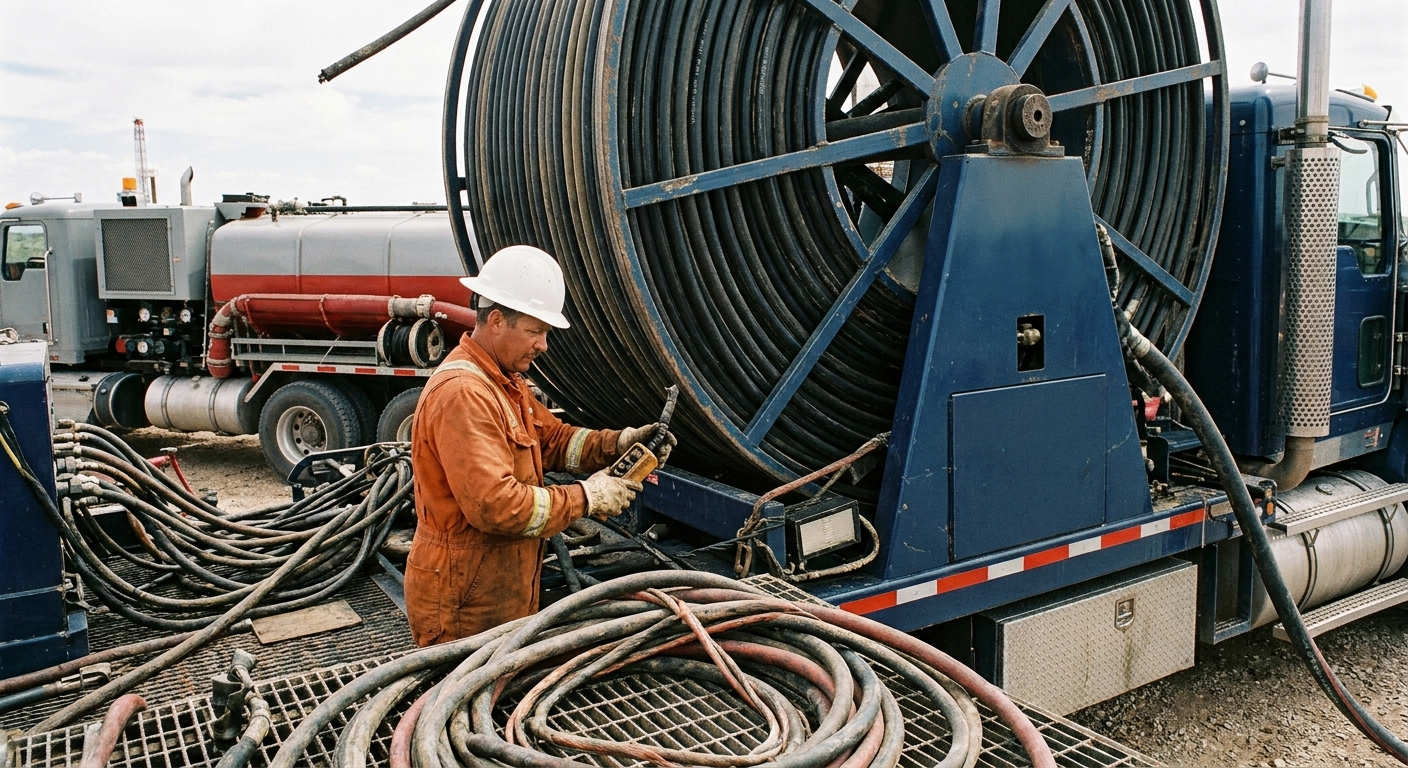

Reduce costs, risk, and non-productive time
Drilling wells with coiled tubing instead of drill pipe has long been recognized as a way to significantly reduce costs and minimize crew exposure to hazardous conditions. But because of limits on delivering weight to the bit, coiled tubing drilling has stayed confined to a few niche applications.
NexTitan removes that constraint by delivering weight to the bit through a patented downhole hydraulic thrusting mechanism, greatly expanding where coiled tubing drilling can be used. That means operators can drill wells faster, deeper, and with longer horizontal sections, an advancement the industry has pursued for decades.
Why coiled tubing has stayed limited, until now
Operators have known coiled tubing's advantages for decades. On Alaska's North Slope, coiled tubing has been used to drill since the mid-1990s as a cost-effective method to redevelop aging fields like Kuparuk and Prudhoe Bay. In Saudi Arabia, Aramco implemented intensive coiled tubing re-entry and drilling programs starting in the late 1990s, expanding over subsequent decades.
What has held it back is physics: the weight on the bit (WOB) delivered from the surface is lost to buckling and friction the deeper the well goes, keeping coiled tubing confined to shorter sections. This is the constraint NexTitan removes. With force applied directly at the bit, the coil only has to carry the tool and the drilling fluid.
Less risk, wider reach
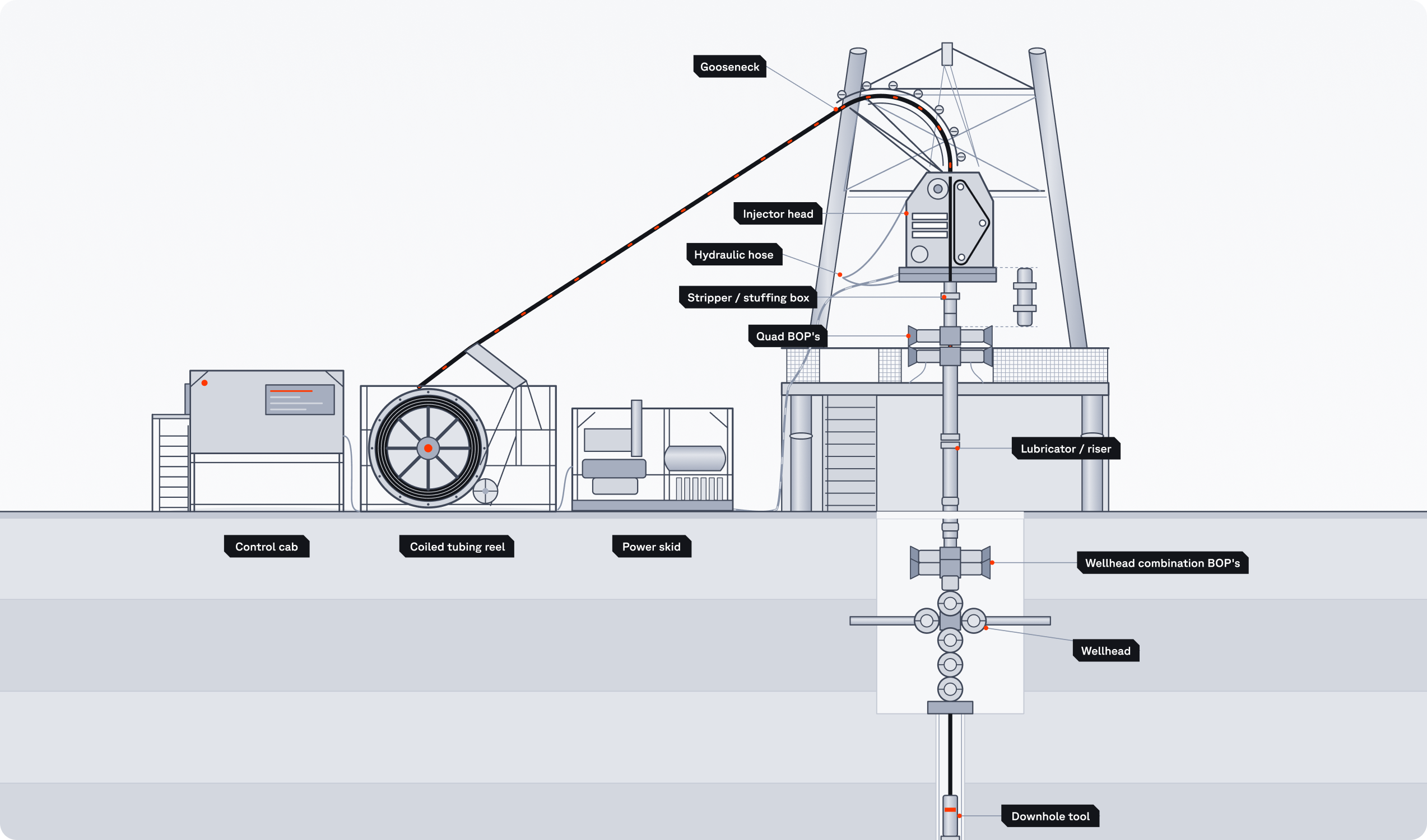
A coiled tubing operation runs on roughly half the daily cost of a conventional rig, with fewer people on site. No drill pipe to assemble means less crew risk, and tripping takes hours instead of days. And that applies almost anywhere wells are drilled.
From the Permian Basin, to the North Slope of Alaska, to the super-giant oil fields of the Middle East, to geothermal wells, and in deepwater, NexTitan-enabled coiled tubing drilling can reduce well construction costs, minimize the number of pads and platforms required, and take personnel out of harm's way. To learn more, contact us.

Do you have questions?
Contact us now.
Other Use Cases