
GeoNerd Digest – 36th Edition: EGS, AGS… and Something In Between?
In our 36th edition we will continue in reviewing papers from SGW2026. This time I chose one paper covering ambitious Enhanced Geothermal Systems (EGS) project while the second one targets one resolving one of the main challenges of Advanced Geothermal Systems (AGS). Since I am often approached with a question about differences between EGS and AGS, let´s start this edition with a short explanation.


EGS vs AGS
EGS and AGS represent two distinct approaches to expanding the usable geothermal resource base beyond conventional hydrothermal reservoirs. While both aim to unlock geothermal energy in areas lacking naturally permeable and fluid-saturated formations, their engineering philosophies, risk profiles, and deployment pathways differ significantly.
EGS is based on the concept of reservoir stimulation. In low-permeability hot rock formations, permeability is artificially created or enhanced—typically via hydraulic, chemical, or thermal stimulation—to establish a connected fracture network. Injection and production wells are then used to circulate a working fluid (usually water), extracting heat from the rock mass. EGS performance is therefore highly dependent on subsurface geology, fracture propagation behavior, and long-term reservoir sustainability. Induced seismicity, fluid losses, and uncertainty in reservoir connectivity remain key technical and regulatory challenges.
AGS, in contrast, generally refers to closed-loop geothermal systems that do not rely on natural or stimulated permeability. Instead, heat is extracted via engineered well architectures—such as coaxial, U-loop, or multilateral systems—where a working fluid circulates within a sealed system. Heat transfer occurs conductively through the surrounding rock into the wellbore. This eliminates the need for reservoir stimulation and significantly reduces risks associated with induced seismicity and fluid migration. However, AGS performance is constrained by heat transfer efficiency, well design complexity, and drilling costs, making system optimization and advanced materials critical.
From a systems perspective, EGS can certainly deliver higher thermal outputs due to direct interaction with large rock volumes, but with greater subsurface uncertainty. AGS offers a more predictable and modular approach but typically lower specific power output per well unless enhanced by innovative designs. A table below summarizes key differences between both systems.
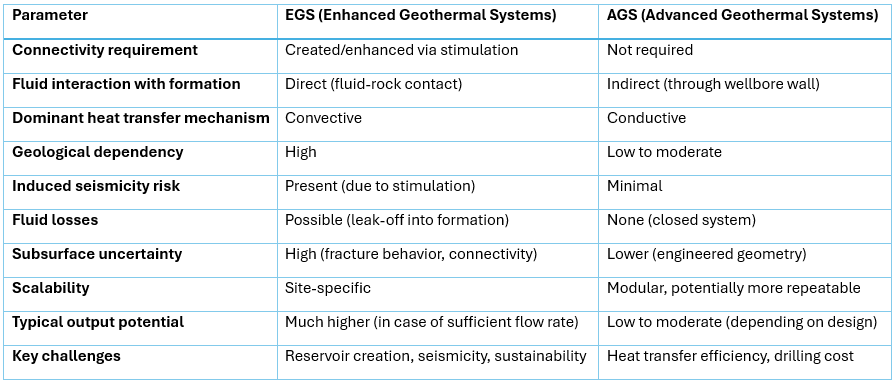
From drilling perspective, both systems come with different challenges. Definitely, AGS is more sensitive to cost per meter than EGS. A positive outlook comes from new innovative technologies. Technologies like NexTitan (Downhole Anchoring and Drive System), Insulated Drill Pipe and High Temperature Downhole Tools are applicable for both systems and can significantly de-risk them. Beyond Next Generation Geothermal (covering both EGS and AGS), these innovative technologies are designed to further reduce cost and reduce LCOE/LCOH of conventional hydrogeothermal projects.
And now, after this introduction let´s review those two papers. The first paper titled "Concept of a High-Temperature EGS Plant in Central Oregon" by Daniel W. Dichter et al. presents an ambitious concept for a high-temperature EGS development at Newberry (Project Obsidian), targeting reservoir temperatures of 315–365 °C at depths of ~4.3–4.9 km. The second paper titled "Hybrid Semi-Loop Single Well Closed EGS system for Highly Elevated Power Capacity" by William K. (Bill) Ott and James Dorman proposes a radical rethinking of geothermal extraction, positioning it as a solution to what the authors describe as fundamental flaws in both conventional EGS and AGS.
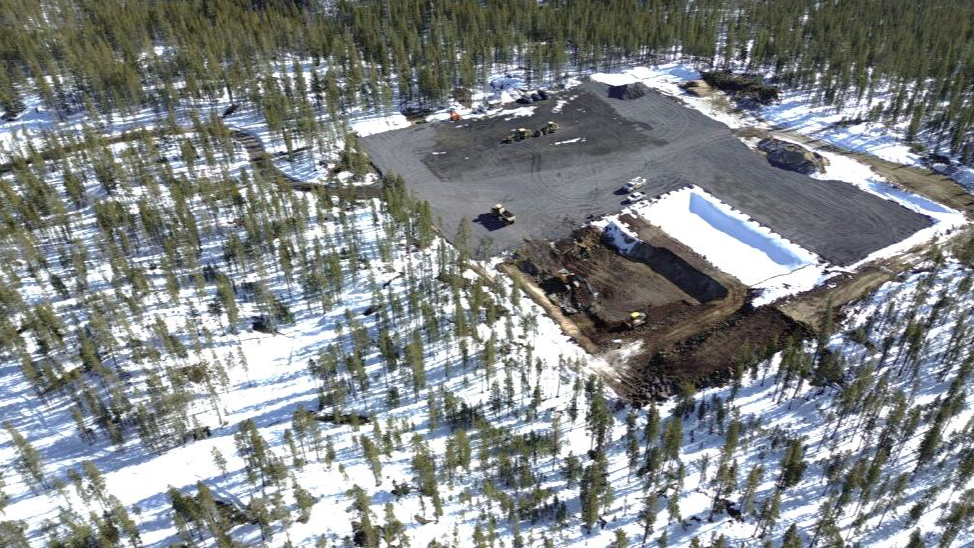
Project Obsidian at Newberry
A central claim of the paper by Daniel W. Dichter presenting Project Obsidian is that a six-well system could deliver ≥50 MWe net. This is grounded in a combination of favorable geothermal gradient assumptions (~100 °C/km) and engineered reservoir creation in low-permeability rock. While the site characterization is broadly consistent with historical exploration at Newberry, the reliance on legacy temperature logs and indirect geophysical indicators introduces a degree of uncertainty that is not fully interrogated. Lease map below and the associated discussion illustrate a plausible geological setting, but the interpretation of anomalies as indicators of usable heat remains somewhat optimistic given the lack of direct deep drilling confirmation.

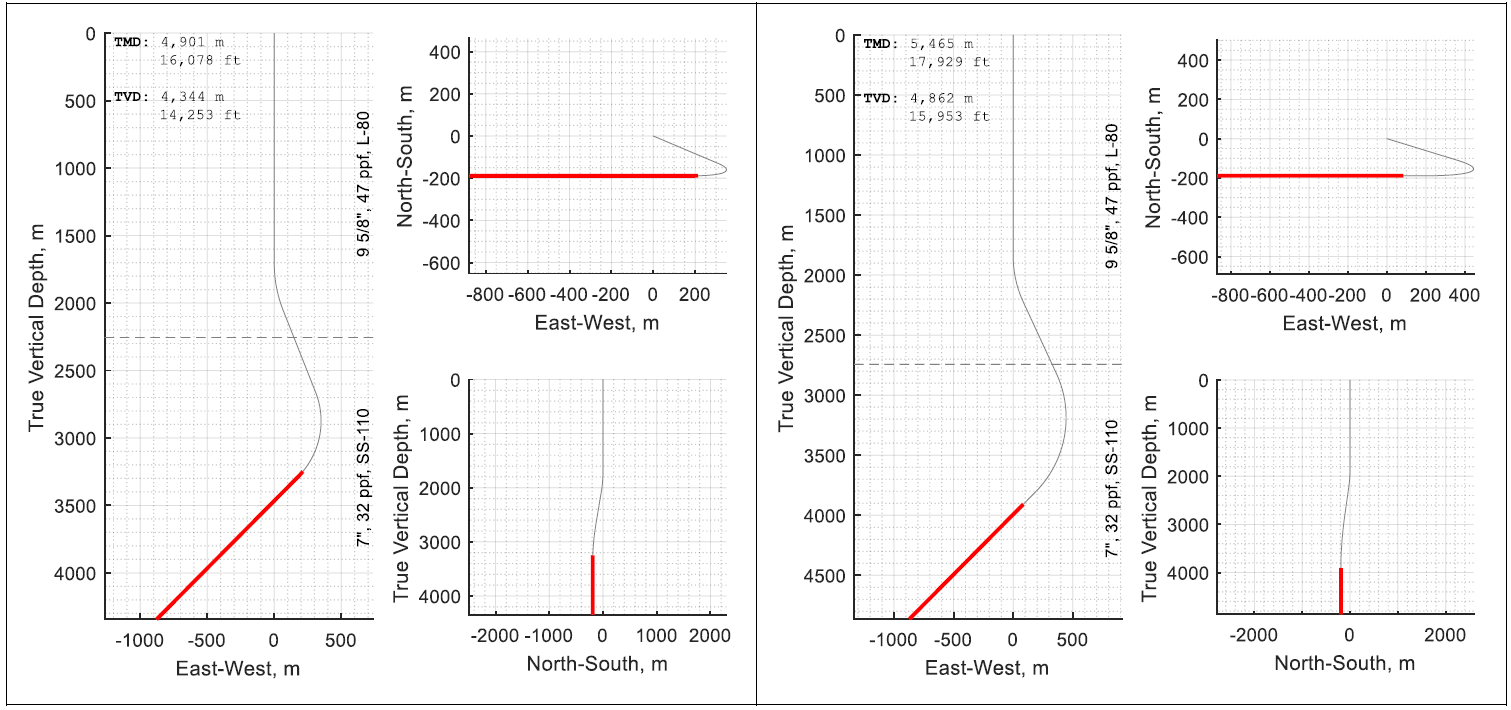
The well architecture is one of the more detailed and convincing aspects of the paper. The use of inclined (~45°) wells with extended feedzones (~1 km projected length) is clearly motivated by the need to intersect vertically propagating fractures, as illustrated in Figure below. This reflects a thoughtful integration of stimulation strategy and drilling design. However, the paper arguably underplays the technical difficulty of directional drilling and casing integrity at such high temperatures, particularly above 350 °C. The assumption that casing designs and trajectories can be adjusted post-confirmation well is reasonable, but it highlights that the current concept is still pre-validation. The symmetry of the well triplets is elegant from a modeling perspective, though real reservoir heterogeneity is likely to break this symmetry in practice.
A central contribution is the flow model, which uses a 1D finite-element approach to simulate compressible, isenthalpic flow in the wellbore. The formulation (Section 3) is standard and transparent, and the use of erosion limits (API RP 14E) to constrain flow rates is appropriate. Still, the model rests on several simplifying assumptions—notably pure water as the working fluid, fully rough turbulent flow, and equilibrium temperature at the feedzone—that may not hold under real EGS conditions. Chemical effects, scaling, non-condensable gases, and transient behavior are neglected. While acceptable for a first-order study, these simplifications likely bias the results toward optimistic performance envelopes.
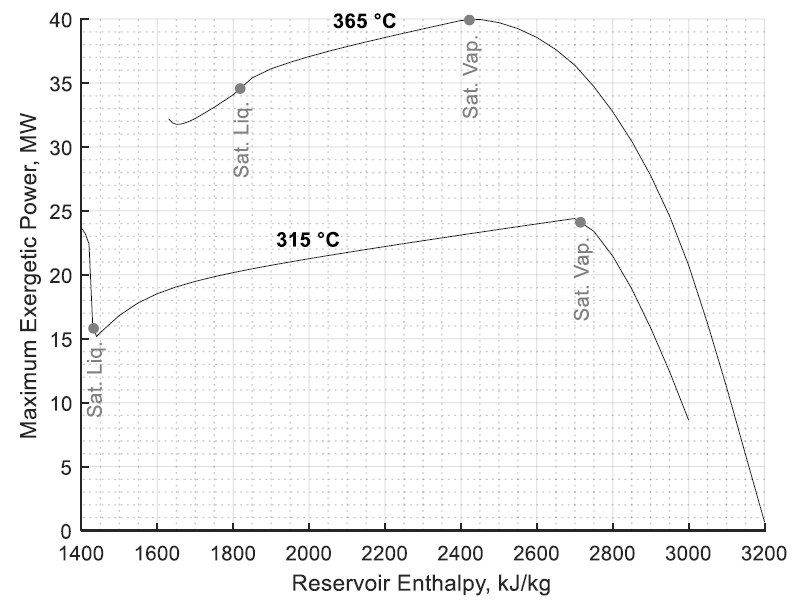
The treatment of geofluid phase and enthalpy is particularly important, and Figures 4–8 form the conceptual core of the paper. The authors convincingly show that feedzone enthalpy is a dominant uncertainty, and that system performance varies significantly between liquid-dominated and vapor-dominated regimes. Figure 6, which maps maximum exergetic power as a function of enthalpy and temperature, is especially insightful. However, the suggestion that enthalpy (and thus phase) can be “controlled” via wellhead pressure in an EGS context deserves a more cautious interpretation. In practice, reservoir processes—fracture connectivity, heat sweep efficiency, and thermal drawdown—may dominate over surface control, limiting operational flexibility.
The power plant analysis is pragmatic, comparing flash, cyclopentane-ORC, and water-binary cycles. Table 1 shows that binary cycles outperform flash across all scenarios, which is consistent with the high-temperature but chemically constrained resource. The differentiation between optimal cycles for liquid- vs vapor-dominated production is a useful takeaway. Still, the reported outputs (e.g., up to ~20–25 MWe per producer in some cases) appear aggressive when compared to existing geothermal benchmarks. The assumption that geofluid temperature remains above 100 °C throughout processing (to avoid scaling) also constrains thermodynamic efficiency, yet the impact of this constraint on long-term performance is not deeply explored.
Overall, the paper outlines a compelling but still conceptual pathway toward high-temperature EGS deployment. Its strength lies in integrating drilling design, reservoir engineering, and surface plant optimization into a coherent system-level vision. At the same time, several key uncertainties remain: reservoir creation effectiveness, long-term thermal sustainability, material performance at extreme temperatures, and the real controllability of geofluid phase. One notable omission is that the authors does not mention millimeter-wave drilling (originally introduced by Quaise Energy) anywhere in the study, which may mean a shift in their company strategy toward more conventional EGS development pathways.
Hybrid Semi-Loop Single (HSLS) Well Closed EGS
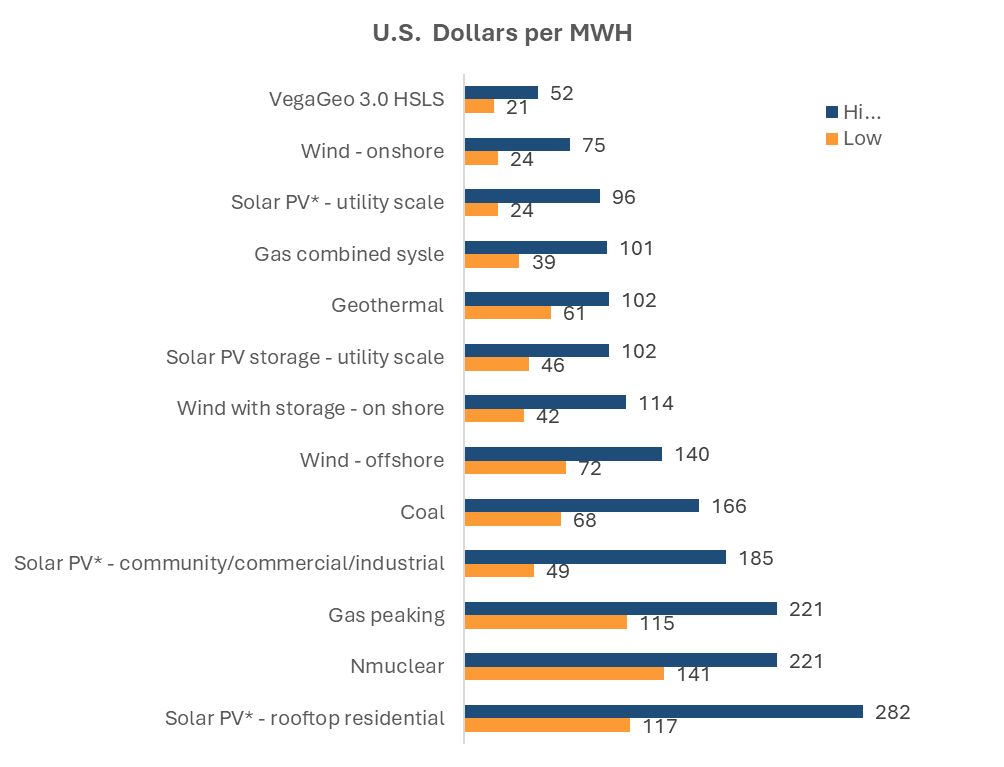
The opening argument of the paper by William K. (Bill) Ott and James Dorman is assertive: traditional EGS is limited by short-circuiting and insufficient thermal recharge, leading to low output and rapid decline. While these criticisms are grounded in known challenges, the framing is somewhat one-sided, presenting EGS performance as broadly “inconsequential” without acknowledging recent field-scale improvements. Figure 1 (technology evolution) and Figure 2 (LCOE comparison) reinforce the narrative of HSLS superiority, but the latter in particular appears highly optimistic, especially the claim of ~$21–52/MWh, which is substantially below most current geothermal predictions.
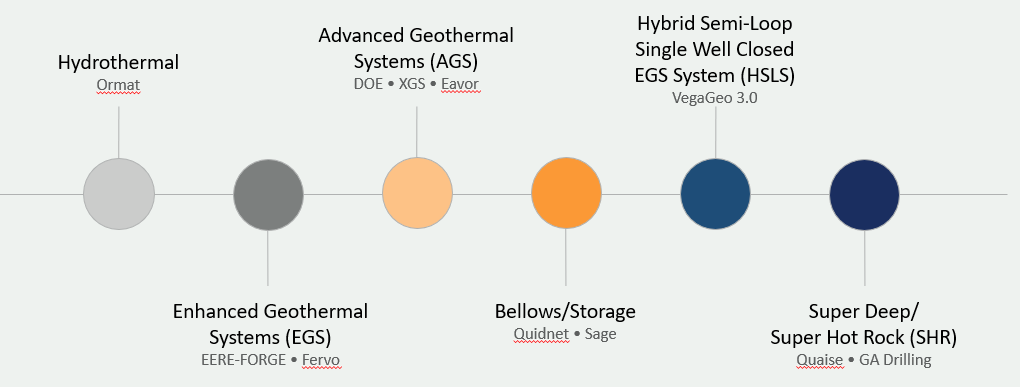
The core innovation—a single-well system with vertically stacked, hydraulically connected, propped fractures and internal flow diversion—is conceptually intriguing. Figure below (system schematic) clearly illustrates the semi-loop architecture, where fluid circulates down the annulus, across engineered fracture planes, and back up the tubing. The idea of combining fracture-based heat exchange (EGS-like) with controlled internal flow paths (AGS-like) is appealing from a systems perspective. However, the feasibility of constructing and maintaining such complex, multi-stage fracture geometries—especially with impermeable barriers and precise hydraulic control—remains largely unproven at scale. The paper assumes a level of geometric control in the subsurface that exceeds current industry experience.

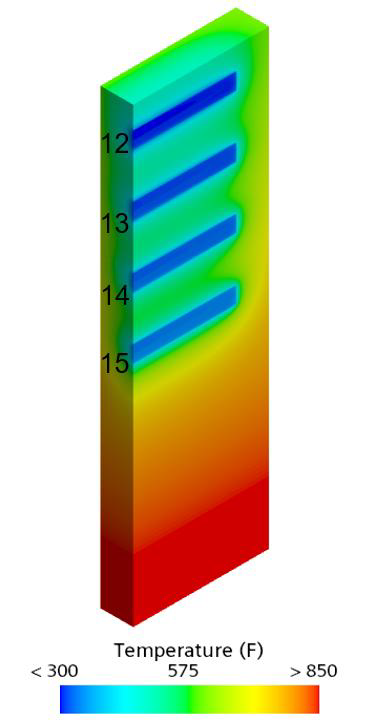
A major strength of the paper is the use of CFD and conjugate heat transfer modeling to evaluate system performance. Figures 6–8 (computational domain, fracture geometry, and mesh) show a reasonably detailed simulation setup, and Figures 9–12 provide useful visualization of temperature evolution in both rock and fluid. These figures demonstrate the intended mechanism: extended residence time and large heat exchange surface area lead to gradual heating of the working fluid.
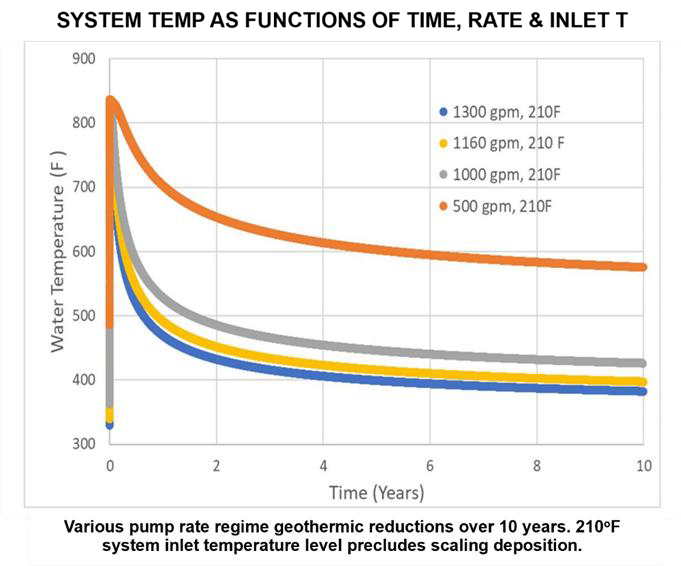
However, the results also reveal a key issue: as shown in Figure 14 (temperature vs. time), production temperatures decline rapidly within the first months before stabilizing after several years. This behavior resembles the thermal drawdown seen in AGS, raising questions about the claim of “unprecedented longevity,” even if the steady-state output remains non-negligible.
The performance claims are perhaps the most contentious aspect. The authors suggest 10–30× higher output than conventional EGS, peak thermal outputs exceeding 100 MWt, and sustained ~50 MWt over 20 years from a single well. These numbers are striking, but they rely entirely on modeled scenarios with idealized assumptions: uniform rock properties, perfect fracture connectivity, and near-complete thermal sweep efficiency. The assumption of ~100% reservoir sweep (Section 8) is particularly optimistic, given that even highly engineered subsurface systems typically exhibit preferential flow paths and incomplete heat extraction. Similarly, the claim that vacuum-driven circulation eliminates parasitic pumping losses (page 8) is innovative but would require careful validation under real multiphase and high-temperature conditions. Overall, the paper presents a bold and imaginative concept that attempts to bridge the gap between EGS and AGS by combining fracture-based reservoirs with controlled circulation.
Questions for Discussion
- Does the absence of millimeter-wave drilling in the Quaise paper indicate a shift toward near-term deployability over breakthrough technologies?
- How do both approaches address (or fail to address) long-term thermal drawdown and reservoir sustainability?
- How do the seismic and fluid-loss risks compare between the two approaches?
- How sensitive are both models to key uncertainties such as permeability, fracture spacing, and fluid properties?
- How do drilling costs vs. reservoir performance trade-offs differ between the two approaches?
Leave your opinion in the comments!
Copyright Notice:
This summary is based on the papers "Concept of a High-Temperature EGS Plant in Central Oregon" by Daniel W. Dichter, Trenton Cladouhos, Quinlan Byrne, Victor Rustom and Greg Szutiak and "Hybrid Semi-Loop Single Well Closed EGS system for Highly Elevated Power Capacity" by William K. (Bill) Ott and James Dorman presented at the SGW 2026, Stanford, CA.. All figures and tables from the paper are used under fair use for review purposes only.


