← Back to glossary
Home
GLOSSARY
Drill Collar

Drill Collar

Equipment & Tools
Definition
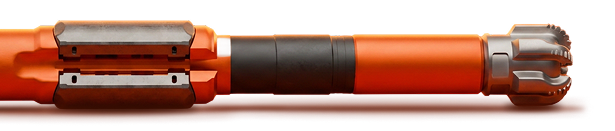
A drill collar is a thick-walled, heavy steel tube in the bottom hole assembly that puts weight on the bit and keeps the drill pipe above it in tension.

What is a drill collar?

A drill collar is a thick-walled, heavy steel tube in the bottom hole assembly (BHA), just above the bit and its tools. Collars are the heaviest part of the drill string. Their weight presses the bit into the rock, which is how most wells get weight on bit.

‍

What does a drill collar do?

  • Weight on bit: the weight of the collars, less the buoyancy from the drilling fluid, supplies the downward force on the bit.
  • Keeps the drill pipe in tension: drill pipe is thin and buckles under compression. The collars carry the compression, so the pipe above them stays in tension.
  • Stiffness: the thick wall resists bending and buckling, which helps hold the direction of the well.
  • Pendulum effect: in a vertical well, heavy collars below a stabilizer help pull the bit back toward vertical.

‍

What types of drill collar are there?

  • Slick collars: smooth on the outside. This is the standard type.
  • Spiral collars: spiral grooves cut into the outside reduce the area that touches the wellbore wall, which lowers the risk of differential sticking.
  • Non-magnetic collars: made from non-magnetic alloys and placed around MWD tools, so the steel in the string does not disturb the magnetic survey.
  • Pony collars: short collars used to adjust the spacing of tools in the BHA.

Steel and non-magnetic drill collars, round and spiral, are covered by API Specification 7-1, Rotary Drill Stem Elements.

‍

How do you calculate how many drill collars you need?

Collars are sized so the planned weight on bit uses only part of their weight in the drilling fluid. The rest is a safety margin, usually 10 to 25%. It keeps the neutral point, where the string changes from compression to tension, inside the collars and not in the drill pipe.

The BHA weight needed, in air, is:

BHA weight = (WOB × safety factor) ÷ (buoyancy factor × cos inclination)

Buoyancy factor = (65.5 − mud weight) ÷ 65.5, with mud weight in ppg

For example, 50,000 lb of weight on bit in a 30° tangent section, with 12 ppg mud and a 25% safety factor, needs about 88,000 lb of BHA weight in air. The motor, stabilizers and other BHA tools count toward that total, and the collars make up the rest (Drilling Formulas).

‍

Why don't drill collars work in horizontal wells?

In a horizontal section the collars lie on the low side of the hole. Their weight presses into the wall, not toward the bit, so they add friction and almost no weight on bit.

Operators move the heavy pipe up into the vertical part of the well, above the curve, and push weight down through the string. This is called an inverted BHA. Friction along the curve and the lateral then takes part of that weight before it reaches the bit. The weight on bit page covers how large that loss can be.

What are the problems with drill collars?

  • Differential sticking: the large outside surface can press against a permeable wall and get stuck. Spiral collars reduce this risk.
  • Connection fatigue: the stiff collar bends at its threaded connections, and cracks start there. Stress relief grooves and bore-back boxes reduce this.
  • Torque and drag: in deviated wells, more collars mean more contact with the wall, which adds torque and drag.
  • Handling: collars are heavy and slow to make up and trip.

‍

Where does NexTitan fit?

Collar weight reaches the bit through gravity, which works best in vertical wells. NexTitan generates the force at the bit instead. It grips the wellbore and applies weight on bit from inside the BHA, so the force at the bit does not depend on collar weight getting there.

To estimate what steadier weight at the bit is worth on your section, use the drilling cost calculator.

Estimate what NexTitan could save on your well

Enter your section length, spread rate and bit cost. Get a modeled savings report.

Take the next step

Drill hard rock with NexTitan

Designed for longer oil & gas wells and deeper, hotter geothermal wells.