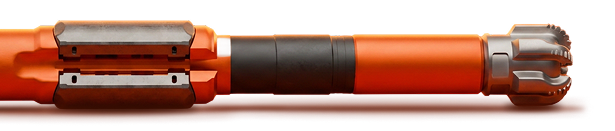
Drilling cost calculator
Model the savings on your own well.
The geothermal gradient is the rate at which rock temperature rises with depth below the surface. In most continental areas it is around 25 to 30°C per kilometer, or roughly 1.4 to 1.6°F per 100 ft.
Multiply the gradient by the depth and add the average surface temperature. For example, with a gradient of 30°C/km and a surface temperature of 10°C, rock at 5 km is about 160°C. Real wells vary, so measured temperatures from nearby wells are always better than an assumed gradient.
It sets how deep you must drill to reach a useful temperature. Where the gradient is high, conventional geothermal wells can be shallow. Where it is average, reaching 150 to 200°C means drilling several kilometers, usually into hard crystalline rock. That depth is why drilling cost decides whether many projects go ahead. See enhanced geothermal systems and geothermal well economics.
Higher temperature shortens the life of downhole electronics and elastomers and changes how drilling fluid behaves. Geothermal wells use mud coolers, high-temperature tools and sometimes insulated drill pipe to stay within limits.
To estimate what faster drilling to depth would be worth, use the drilling cost calculator.

The tool, step by step.
Ask about your well or formation.