Drilling cost calculator
Model the savings on your own well.
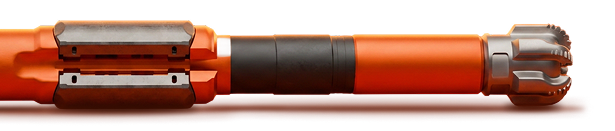
A rotary steerable system (RSS) is a directional drilling tool that steers the well while the whole drill string keeps rotating. It sits just above the bit and takes steering commands from surface.
Commands are sent from surface, often by rotary downlinking or flow changes, and the tool reports its direction through MWD.
A mud motor with a bent housing steers only when the string stops rotating (sliding). Sliding is slower, leaves a less smooth hole and makes weight transfer harder. An RSS avoids sliding, so it usually drills faster and gives better hole quality and cleaning. Motors cost less and are simpler, and the two are often run together, with the motor adding speed and torque at the bit.
High-dogleg RSS designs can build angle at rates once possible only with motors (SPE 124498). See dogleg severity.
Cost and risk: an RSS is expensive to run and to lose in the hole. Heat limits the electronics in hot wells. In long laterals, the RSS still depends on getting enough weight on bit through a drill string that drags against the wall.
NexTitan is not a steering tool. It runs alongside the RSS or motor and applies weight on bit downhole, so the force at the bit does not depend on friction along the well.
To estimate what steadier weight at the bit is worth on a directional section, use the drilling cost calculator.

The tool, step by step.
Ask about your well or formation.