Drilling cost calculator
Model the savings on your own well.
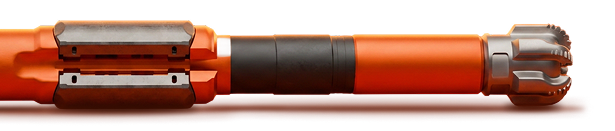
A vibration dampener, often called a shock sub, is a downhole tool placed in the bottom hole assembly to absorb vibration and shock before they reach sensitive tools such as MWD and LWD electronics.
Most use springs, such as stacked disc springs, or elastomer elements that compress under load and soften sudden impacts. Some newer designs target torsional vibration, including high-frequency torsional oscillation (HFTO).
Drilling dynamics are linked to 20 to 30% of downhole tool failures (SPE 127413), and MWD tools are commonly rated for lateral shock around 25 g. Each failure can mean a trip, lost bit life and non-productive time.
A dampener treats the symptom. It protects tools from vibration that is already happening but does not stop the cause, such as an unsteady force at the bit or rock changes. It also adds length and a possible failure point to the BHA.
Damping absorbs vibration after it starts. Control changes the conditions that cause it, for example by adjusting weight on bit and rotary speed or holding force steady at the bit. GA Drilling's NexTitan is designed for the second approach, controlling force at the bit downhole. See downhole force control.
To estimate what fewer tool failures would be worth on your section, use the drilling cost calculator.

The tool, step by step.
Ask about your well or formation.