
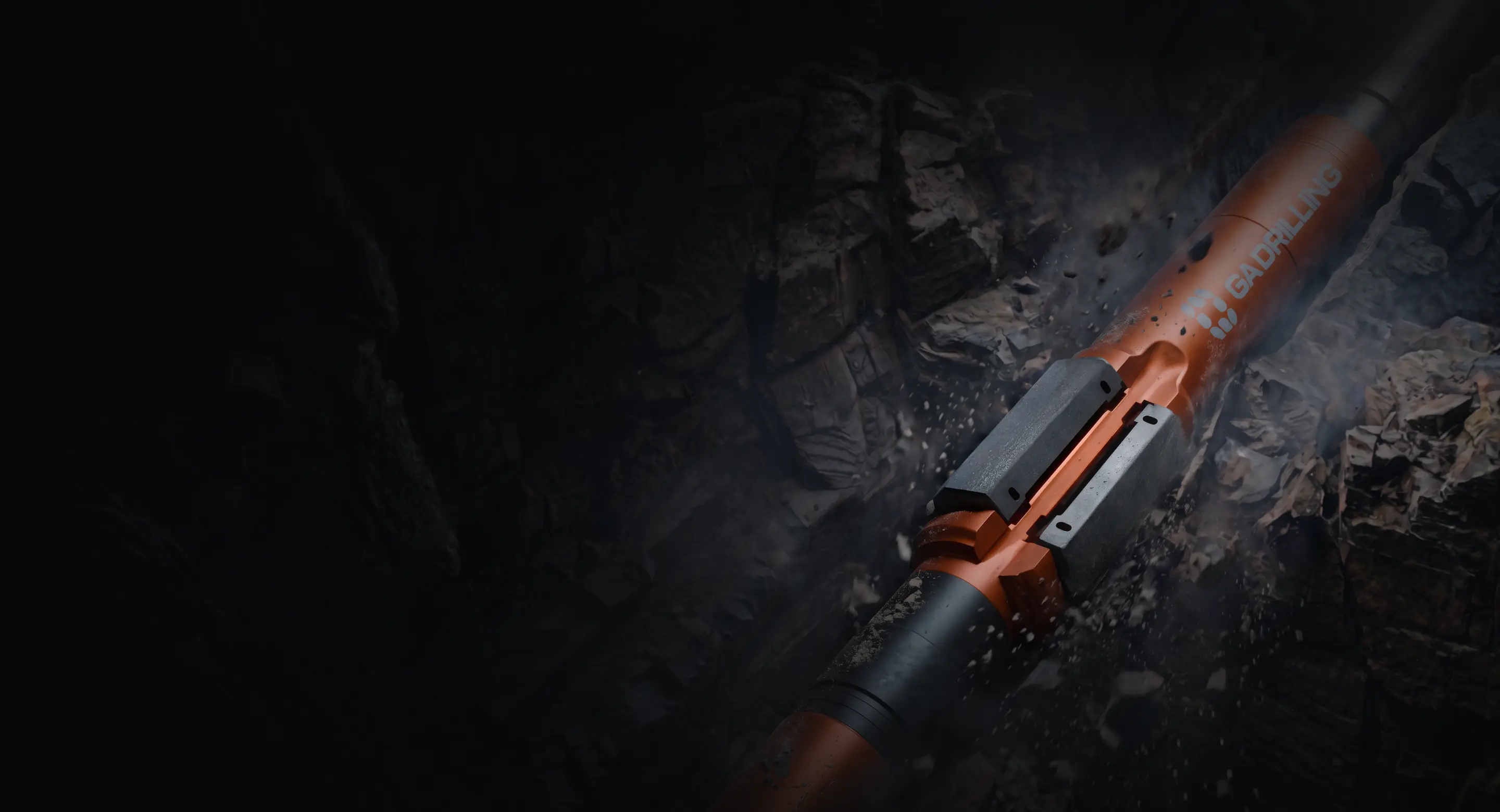

NexTitan, GA Drilling's autonomous downhole drilling tool for hard-rock geothermal wells and oil and gas wells, has completed two field test phases at the NORCE Ullrigg test site in Stavanger, Norway. In the second phase, two NexTitan downhole drive units working as one system drilled 66 ft (about 20 m) of phyllite at 22,000 psi UCS across 7.5 hours of combined drilling and circulation operations, keeping continuous force on the drill bit.
Phase 1, February 2026
NexTitan gripped the borehole and generated 32,000 lbf of axial thrust in open hole at depth, with the drill string rotating. The test well ran through phyllite (22,000 psi UCS) and gneiss (33,000 psi UCS), and the borehole was oversized to 10 in. in places. Walking speeds matched specification at 50 m/hr in cased hole and 30 m/hr in open hole, with no sticking on run-in or pull-out. A full electronics changeout on the rig floor took under an hour. Read the Phase 1 results.
Phase 2, April 2026
Two drive units ran in a coordinated handover, one driving while the other reset, so force on the bit didn't drop between cycles. Force control precision reached ±500 lbf, the best result so far. A downhole turbine generator prototype also powered a representative NexTitan load from drilling fluid flow, as an alternative to batteries. Read the Phase 2 results.
Why it matters
Hard rock is where deep geothermal drilling slows down and costs rise. NexTitan applies weight on bit at the drill bit instead of from the surface, and is designed to help operators drill hard rock faster and with fewer trips.


