Drilling cost calculator
Model the savings on your own well.
Drilling optimization is adjusting parameters such as weight on bit, rotary speed, flow rate and BHA design to drill faster and more reliably at lower cost. Traditionally this meant planning parameters before a run and adjusting them by hand. Drilling optimization technology does it continuously during the run, using real-time data and automated control.
Modern systems combine several data streams:
Software turns these into a model of how the bit and drill string are behaving, and recommends or makes changes as conditions shift.
The standard measure is mechanical specific energy (MSE), the energy spent to remove a unit volume of rock. When MSE stays close to the rock's strength, most of the energy is going into cutting. When MSE rises, energy is going into vibration, bit wear or friction instead (SPE 24584). Adding weight helps up to a limit, and past it the gains flatten and reverse (SPE 92194).
Published results for automated and autonomous systems range from small single-digit gains to more than 50% in some sections, depending on the well. See drilling automation for the field studies.

On wells with high daily rig or spread rates, such as deepwater, every hour saved has a large value. In geothermal wells, hard rock drilling takes up much of the budget, so drilling speed has a direct effect on whether a project goes ahead.
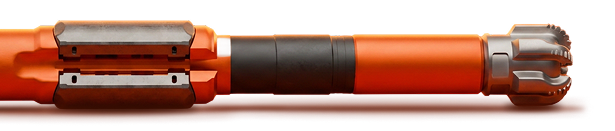
Most optimization runs from surface. GA Drilling's NexTitan is designed for closed-loop optimization at the bit: it applies and measures the force on the bit downhole and adjusts it as the formation changes, which is covered in more detail under downhole force control.
To estimate what faster, steadier drilling is worth on your own section, use the drilling cost calculator.

The tool, step by step.
Ask about your well or formation.