Drilling cost calculator
Model the savings on your own well.
A drilling simulator is software, sometimes with a full rig control cabin, that models how a well behaves while it is drilled. It uses physics-based models of the rock, the drill string, the bit and the fluid.
A training simulator focuses on the driller's experience: rig controls, alarms and realistic responses. An engineering simulator, sometimes called a digital twin, focuses on accurate physics of the bit, drill string dynamics and rock, so its results can guide real decisions.
Every automated system needs to be tested before it controls a real well. A simulator lets developers run thousands of scenarios, such as hard rock stringers, stick-slip or a sudden change in weight on bit, and see how the control responds. See drilling automation.
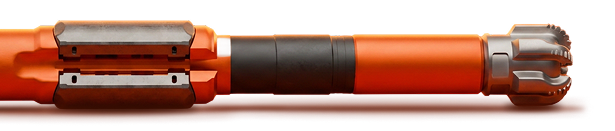
Yes. Advansa AI, GA Drilling's software for NexTitan, includes a drilling simulator alongside its data pipeline and interface. It is used to test how NexTitan responds to downhole conditions before a run.
If you want to see how NexTitan would respond on your well, talk to our engineers.

The tool, step by step.
Ask about your well or formation.