Drilling cost calculator
Model the savings on your own well.
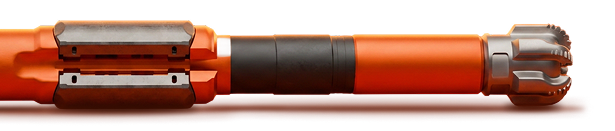
A downhole tool is equipment that works inside the well rather than at surface. It is run on the drill string, on coiled tubing or on wireline. Because it sits thousands of metres below the rig, it has to survive heat, pressure, vibration and abrasion with no one able to reach it.
Vibration is the main cause. Drilling dynamics are linked to 20 to 30% of downhole tool failures (SPE 127413). Heat is the other, especially in deep geothermal wells where electronics reach their temperature limit. See drilling dysfunction.
Most downhole tools do one fixed job, or wait for a command from surface. An autonomous tool senses conditions at the bit and responds on its own, without a signal that has to travel the length of the well. GA Drilling's NexTitan works this way: it reads what the rock is doing and adjusts the force it applies at the bit. See downhole force control.
To estimate what steadier force at the bit would be worth on your section, use the drilling cost calculator.

The tool, step by step.
Ask about your well or formation.